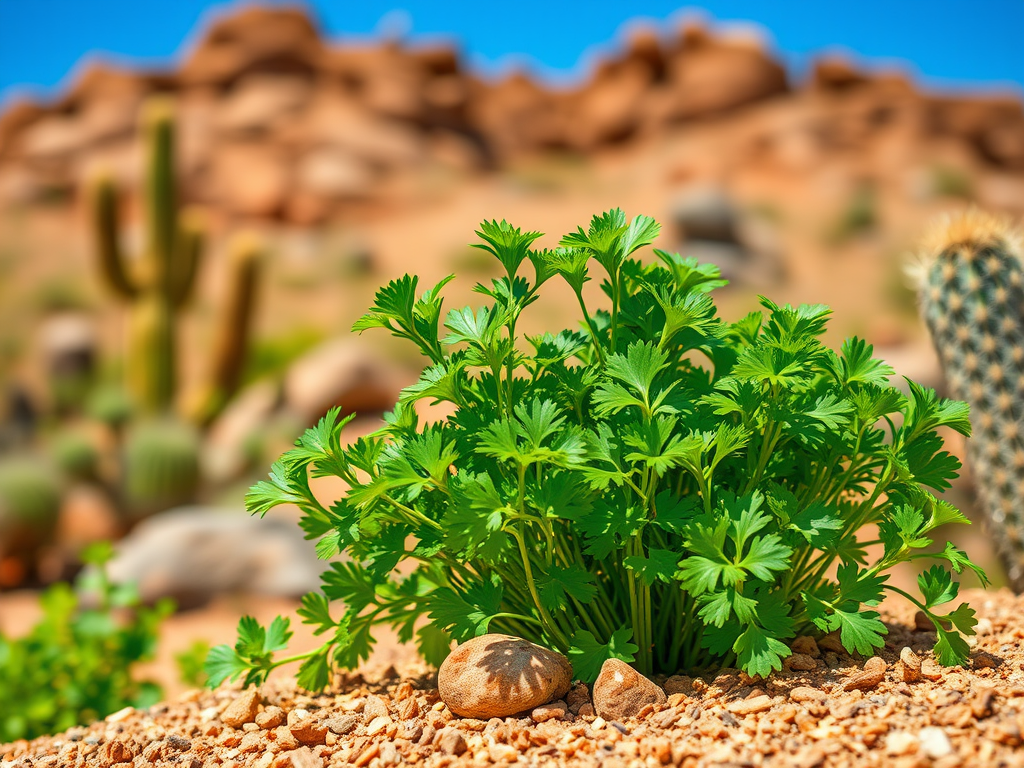
Cilantro, with its vibrant, citrusy flavor, is a culinary favorite that can thrive in Arizona’s low desert, including San Tan Valley, Queen Creek, and Florence, when grown with care. In Pinal County’s arid climate (USDA Hardiness Zones 9a-10b, 8-12 inches annual rainfall), the intense summer heat and low humidity challenge this cool-season herb, but strategic planting and maintenance make it a rewarding addition to your garden. This guide, informed by the University of Arizona Cooperative Extension and Pinal County Master Gardeners, details optimal planting times, the best cilantro varieties, and essential growing tips to ensure a bountiful harvest of fresh leaves in Arizona’s unique environment.
Why Grow Cilantro?
Cilantro (Coriandrum sativum) is a versatile herb, enhancing dishes like salsas, curries, and salads with its distinctive flavor. Its seeds, known as coriander, add a warm, spicy note to cooking. In Arizona’s low desert, cilantro’s ability to grow quickly during cooler months makes it ideal for home gardeners. Growing your own ensures a fresh, pesticide-free supply, reducing grocery costs and adding a sustainable touch to your kitchen. Additionally, cilantro attracts beneficial insects like ladybugs and bees, supporting garden ecosystems.
Planting Times for Cilantro Seeds
Cilantro is a cool-season annual that thrives in temperatures between 50-85°F but bolts (produces flowers and seeds) rapidly in heat above 85°F, reducing leaf quality. In Arizona’s low desert, timing is critical to avoid summer heat:
- Fall and Winter (October-January): The optimal planting window is from October through January, when daytime temperatures range from 60-80°F. This allows cilantro to grow steadily during the mild winter, providing a long harvest period before spring heat triggers bolting.
- Early Spring (February): A secondary planting in February is possible, but the harvest window is shorter as temperatures rise by March or April, hastening bolting.
Succession Planting: To ensure a continuous supply, plant seeds every 2-3 weeks during the growing season (October-January). This staggered approach, recommended by Growing In The Garden (https://growinginthegarden.com/how-to-grow-cilantro-5-tips-for-growing-cilantro/), keeps fresh cilantro available as earlier plants bolt.
Comparison with Other U.S. Regions:
- Northeast/Midwest (Zones 3-6): Plant seeds 3-4 weeks before the last frost (April-May) for a spring-to-summer harvest. Cooler summers allow a longer growing season than Arizona’s short window.
- Southeast (Zones 7-9): Plant in fall (September-October) or early spring (February-March), similar to Arizona, but milder winters and higher humidity extend the season.
- West Coast (Zones 7-10): Coastal areas plant year-round; desert regions align with Arizona’s February or fall schedule.
- Mountainous Regions (Zones 5b-7b): Plant in late spring (May-June) after frost, with cooler summers supporting longer growth.
Arizona’s early fall-to-winter planting contrasts with colder regions’ spring focus, driven by the need to avoid summer heat, as noted by A&P Nursery (https://www.apnursery.com/how-to-grow-cilantro-in-arizona/).
Best Cilantro Varieties for Arizona’s Low Desert
Selecting slow-bolting varieties extends the harvest period in Arizona’s warm climate, where heat can trigger early flowering. While standard cilantro seeds work, slow-bolting types are ideal for Pinal County’s conditions. Recommended varieties include:
| Variety | Features | Source |
|---|---|---|
| ‘Long Standing’ | Delays bolting, providing a longer leaf harvest; robust flavor | Local nurseries, SummerWinds, online seed suppliers |
| ‘Slo Bolt’ | Resists early flowering, heat-tolerant, ideal for Arizona’s climate | Local nurseries, online seed suppliers |
| ‘Calypso’ | Slow-bolting, high-yielding, with strong flavor; suited for warm regions | Local nurseries, online seed suppliers |
Note: Native Seed Search in Tucson (https://www.nativeseeds.org) may offer cilantro seeds adapted to the Southwest, though specific varieties are not always listed. Check their catalog for heirloom or regional options. Standard cilantro seeds from local nurseries like SummerWinds are also effective with proper timing and care.
Growing Conditions
Cilantro thrives in specific conditions tailored to Arizona’s low desert:
- Soil: Requires well-draining soil with a pH of 6.2-6.8. Arizona’s alkaline soils (pH 7.5-8.5) and low organic matter (<1%) need amendment with 2-4 inches of compost or well-rotted manure to improve fertility and drainage. Test soil through the University of Arizona’s Soil Testing Lab (https://extension.arizona.edu/laboratories-conducting-soil-plant-feed-or-water-testing).
- Sunlight: Provide 6-8 hours of morning sun with partial afternoon shade to protect from intense heat, especially in late winter. Plant near taller crops or use 30% shade cloth, as suggested by PHX Gardening (https://phxgardening.com/grow-cilantro/).
- Watering: Keep soil consistently moist during germination (7-10 days), watering daily if needed. Once established, water deeply but infrequently (1-2 inches weekly) using drip irrigation to minimize evaporation, per the University of Arizona Cooperative Extension (https://extension.arizona.edu/sites/extension.arizona.edu/files/pubs/az1392-2023.pdf).
- Mulching: Apply 2-3 inches of organic mulch (e.g., straw, bark) to retain moisture, cool roots, and suppress weeds, critical in Pinal County’s arid climate.
Step-by-Step Planting Guide
Cilantro is best grown from seeds due to its taproot, which makes transplanting challenging. Follow these steps:
- Prepare the Soil: Loosen soil to 6-8 inches deep and mix in compost to enhance fertility and drainage.
- Sow Seeds: Plant seeds ¼ inch deep, 2-3 inches apart in rows spaced 12-18 inches. Alternatively, broadcast seeds in a bed and thin later. Gently crush seed husks and soak for 48 hours to speed germination, as recommended by A&P Nursery.
- Water: Keep soil moist during germination (7-10 days), watering lightly daily. After germination, reduce to deep weekly watering.
- Thin Seedlings: Once seedlings are 2-3 inches tall, thin to 6-8 inches apart to ensure healthy growth.
Care and Maintenance
- Fertilization: Apply a balanced, slow-release fertilizer (e.g., 10-10-10) every 4-6 weeks, using ¼ cup per 25 feet of row, as advised by The Old Farmer’s Almanac (https://www.almanac.com/plant/cilantro-coriander). Avoid over-fertilizing to maintain flavor.
- Weed Control: Keep beds weed-free to reduce competition. Franciscan Landscape uses eco-friendly methods, applying 10% vinegar for existing weeds and corn gluten meal for pre-emergent control, ensuring safety for families and pets.
- Pest Management: Monitor for aphids and whiteflies, common in Arizona. Use organic controls like neem oil or insecticidal soap, which attract beneficial insects like ladybugs, as noted by PHX Gardening. Cilantro itself can act as a trap crop for aphids, protecting nearby plants.
- Bolting Prevention: Harvest frequently and provide shade to delay bolting. If plants bolt, allow seeds to mature for coriander or self-seeding.
Harvesting Cilantro
Harvest cilantro when leaves are 4-6 inches tall, typically 45-60 days after planting:
- Method: Cut outer leaves 1-2 inches above the crown, leaving inner leaves to continue growing. This “cut-and-come-again” method extends harvests, per Bonnie Plants (https://bonnieplants.com/blogs/how-to-grow/growing-cilantro).
- Fresh Use: Use leaves fresh for optimal flavor in salsas, salads, or garnishes.
- Drying: Dry leaves in a cool, dark place and store in airtight containers.
- Coriander Seeds: Allow some plants to bolt and produce seeds, harvesting when they turn brown for use as coriander.
Arizona-Specific Tips
- Succession Planting: Plant seeds every 2-3 weeks from October to January to ensure a continuous supply, as cilantro bolts quickly in warm weather.
- Shade Protection: Use shade cloth or plant near taller crops (e.g., tomatoes, peppers) to provide afternoon shade, reducing heat stress.
- Cooling Techniques: Mist plants lightly in the morning to increase humidity, mimicking cilantro’s preferred conditions, but avoid overwatering to prevent root rot.
- Container Gardening: Grow cilantro in 6-8-inch deep pots with drainage holes for flexibility, ideal for patios or small spaces in Pinal County.
Local Resources
Pinal County gardeners can access robust support:
- Pinal County Master Gardeners: Contact the Plant Helpline (520-836-5221) or visit the Maricopa Agricultural Center’s demonstration garden (37860 W. Smith-Enke Rd, Maricopa, AZ) for hands-on guidance. Workshops, like the Casa Grande Master Gardener Course starting February 13, 2025, offer practical learning (https://extension.arizona.edu/pinal-county-master-gardener-program).
- University of Arizona Cooperative Extension: Explore herb gardening resources at extension.arizona.edu or refer to the Arizona Master Gardener Manual for detailed advice.
- Local Nurseries: SummerWinds Nursery offers cilantro seeds, compost, and drip irrigation kits suited to Pinal County’s climate (https://www.summerwindsnursery.com/az/plants/herbs/cilantro/).
- AMWUA: Provides water-saving tips and plant care advice compatible with cilantro cultivation (https://www.amwua.org).
Conclusion
Growing cilantro in Arizona’s low desert, including San Tan Valley, Queen Creek, and Florence, is achievable with strategic planting and care. By sowing seeds from October to January, choosing slow-bolting varieties like ‘Long Standing’ or ‘Slo Bolt,’ and providing consistent moisture, shade, and eco-friendly weed control, you can enjoy fresh cilantro throughout the cooler months. With support from the Pinal County Master Gardeners and University of Arizona Cooperative Extension, your cilantro garden can thrive. Start today—visit the Maricopa Agricultural Center, call the Plant Helpline, or explore local nurseries for seeds and supplies to bring this flavorful herb to your kitchen!
 Franciscan Landscape