The deserts of Arizona and New Mexico are filled with plants that have not only survived for centuries but also shaped the ecosystems and cultures of the Southwest. Two of the most iconic species—creosote bush and mesquite trees—are more than hardy desert survivors. They are ecological powerhouses that support soil health, provide wildlife habitat, and offer endless inspiration for eco-friendly landscaping in San Tan Valley, Florence, and beyond.
Creosote Bush (Larrea tridentata): The Desert’s Survivor
Creosote is one of the most common plants in the Sonoran Desert, easily recognized by its small, resinous leaves and distinct scent after rain.

Adaptations
- Thrives in extreme heat and drought with minimal water needs.
- Can live for hundreds—and in some cases, thousands—of years.
- Deep roots stabilize soil and reduce erosion.
Benefits for Landscaping
- Soil Health: Its roots help hold desert soils in place, making it excellent for erosion control in xeriscapes.
- Low Maintenance: Requires almost no irrigation once established.
- Wildlife Value: Provides shelter for small animals and nectar for desert pollinators.
🌿 Design Idea: Use creosote as a natural screen or backdrop in a desert garden, pairing it with colorful accents like fairy duster or desert marigold.
Mesquite Trees (Prosopis velutina and others): Shade and Sustainability
Mesquite trees are native to the Southwest and have long been valued for their shade, wood, and ecological contributions.
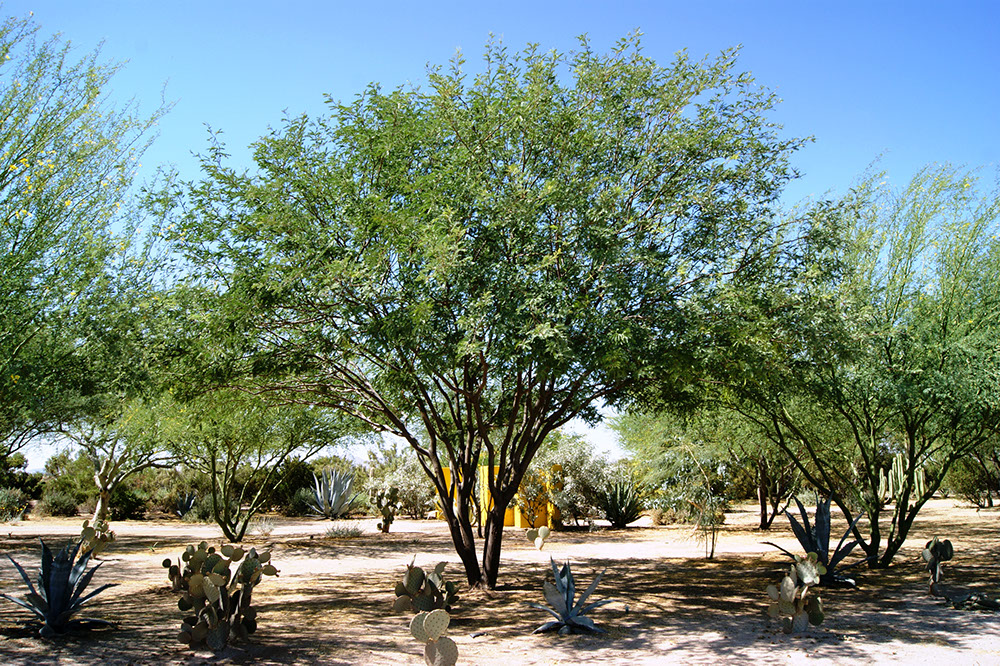
Adaptations
- Deep taproots allow survival in extreme drought.
- Nitrogen-fixing ability enriches the soil.
- Provides filtered shade without blocking too much light.
Benefits for Landscaping
- Soil Enrichment: Improves fertility, making it easier for other plants to thrive nearby.
- Wildlife Habitat: Attracts pollinators with spring flowers and provides food and shelter for birds.
- Cultural Uses: Historically used for food, firewood, and building material in desert communities.
🌳 Design Idea: Incorporate mesquite as a shade tree in a xeriscape patio, with succulents and agaves planted beneath its filtered canopy.
Designing with Creosote and Mesquite in the Greater Southwest
Together, these plants create landscapes that reflect the authentic desert Southwest while conserving water and supporting local ecosystems. Here are a few ideas for homeowners in Arizona and New Mexico:
- Natural Desert Garden: Combine creosote with saguaros, prickly pear, and brittlebush for a low-water native garden.
- Shaded Gathering Spaces: Plant mesquites around patios to provide relief from the sun while enhancing soil health.
- Pollinator-Friendly Planting: Add seasonal color plants like chuparosa, penstemon, or Texas sage alongside creosote and mesquite for year-round wildlife support.
By choosing these hardy natives, homeowners can enjoy beautiful, low-maintenance yards while contributing to a healthier desert ecosystem.
About Franciscan Landscape
At Franciscan Landscape, we design and maintain eco-friendly landscapes inspired by Arizona’s desert plants. Serving San Tan Valley and Florence, AZ, we specialize in xeriscape design, native planting, and sustainable outdoor living spaces that thrive in the Southwest’s climate.
🌐 Visit us at FranciscanLandscape.com
📞 Call us today at 480-382-8832 for a free consultation.

 Franciscan Landscape