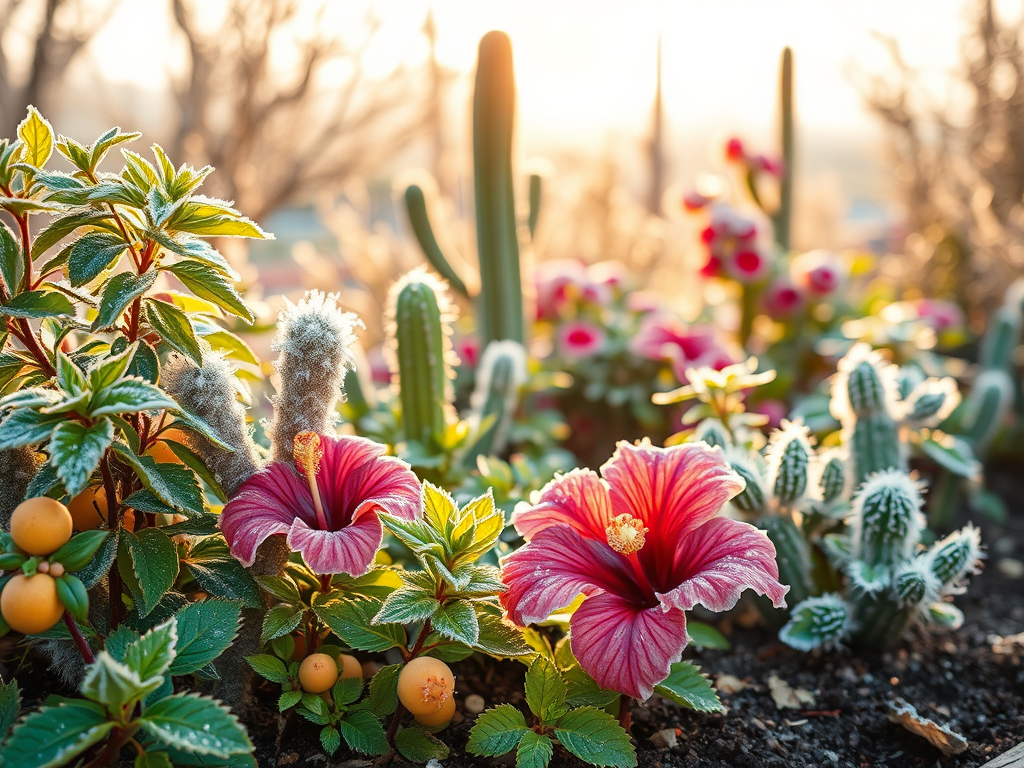
Winter in Arizona’s low desert, including San Tan Valley, Queen Creek, and Florence, brings mild days but occasional frosty nights that can harm sensitive plants. While Arizona is known for its scorching summers, temperatures in Pinal County (USDA Hardiness Zones 9-10B) can dip below 32°F from late November to early February, threatening citrus, cacti, vegetables, and tender flowers. By preparing your garden for these cooler months, you can ensure your plants thrive into spring. This guide, informed by the University of Arizona Cooperative Extension and Pinal County Master Gardeners, offers practical tips to safeguard your garden from frost, keeping it vibrant and healthy.
Why Protect Plants from Frost?
Frost occurs when temperatures drop to or below 32°F, causing ice crystals to form on plant tissues, which can damage or kill sensitive species. In Pinal County’s arid climate, with 8-12 inches of annual rainfall, frost is less frequent but still a risk, particularly for non-native or water-retaining plants. Protecting your garden:
- Preserves Plant Health: Prevents damage to leaves, stems, and roots, ensuring spring vitality.
- Saves Investment: Protects valuable plants like citrus trees and perennials.
- Extends Growing Seasons: Allows tender vegetables like tomatoes to survive winter.
- Enhances Aesthetics: Maintains a lush, green garden year-round.
Understanding Frost Risks in Pinal County
Frost in Arizona’s low desert typically occurs between late November and early February, with first frost dates ranging from November 21 to December 12 and last frost dates from February 7 to April 3, based on Maricopa County data from the University of Arizona Cooperative Extension. Pinal County, including San Tan Valley, Queen Creek, and Florence, has similar frost patterns due to its low elevation (1,000-2,000 feet). Frost severity varies:
- Light Freeze (29-32°F): Damages tender plants like basil or young citrus.
- Moderate Freeze (25-28°F): Harms most plants, including vegetables and cacti.
- Severe Freeze (below 24°F): Causes heavy damage, potentiallykilling unprotected plants.
Monitor local weather forecasts, as rural areas like those south of Phoenix experience radiational cooling, leading to colder nights, as noted by the National Weather Service (Freeze Warning).
Which Plants Need Protection?
Not all plants require frost protection, but identifying vulnerable ones is key:
- Frost-Sensitive Plants: Young citrus trees, hibiscus, bougainvillea, lantana, and tender perennials like tomatoes, peppers, and basil.
- Water-Retaining Plants: Cacti (e.g., Mexican Fence Post, Prickly Pear) and succulents with high moisture content, as freezing water in their tissues can cause damage (Wildflower Desert Design).
- Vegetables and Flowers: Cool-season crops like lettuce and broccoli tolerate light frost, but tender annuals like petunias need covering.
- Desert-Adapted Plants: Native species like palo verde and mesquite are generally frost-tolerant, requiring less protection (AMWUA Blog).
Place frost-sensitive plants in warmer microclimates, such as near south- or west-facing walls, patios, or rocks that reflect heat, to reduce frost risk.
Methods to Protect Your Plants
Effective frost protection combines strategic preparation and timely action. Here are proven methods from the University of Arizona Cooperative Extension and local experts:
1. Cover Plants
Covering plants traps heat radiating from the soil, raising temperatures by a few degrees:
- Materials: Use frost cloth (protects to 30°F, some to 20°F), lightweight cotton sheets, or painter’s cloth. Avoid non-porous plastics like tarps, which trap moisture and cause frost damage (Unique Companies).
- Technique: Drape covers from the plant’s top to the ground, ensuring no openings. Ideally, use a frame to prevent contact with foliage, but lightweight materials are generally safe. Secure with stakes or rocks to withstand wind.
- Timing: Cover before sunset and remove when temperatures under the cover reach 50°F to prevent overheating (AZ Plant Lady).
2. Water Before Frost
Moist soil retains heat better than dry soil, protecting roots:
- When: Water thoroughly 1-2 days before a forecasted freeze.
- How: Ensure even moisture without waterlogging, using drip irrigation for efficiency (AZ Central).
3. Apply Mulch
Mulch insulates soil, stabilizing root temperatures:
- Materials: Use 2-3 inches of organic mulch (e.g., bark, straw) or inorganic mulch (e.g., gravel).
- Application: Spread around plant bases, avoiding direct contact with stems to prevent rot.
4. Wrap Young Trees
Young trees, especially citrus, are vulnerable to frost:
- Method: Wrap trunks with multiple layers of weatherproof paper, burlap, or cloth from mid-November to mid-February. Secure with tape or ties, covering from the ground to the lowest branches.
- Purpose: Insulates against cold, preventing bark splitting or dieback.
5. Move Potted Plants
Potted plants are more exposed to cold:
- Action: Bring indoors to a garage, patio, or near a warm wall during freezes. If indoors isn’t possible, group pots together and cover with frost cloth.
- Plants: Prioritize tender potted plants like hibiscus or basil.
6. Use Supplemental Heat (Severe Freezes)
For moderate to severe freezes (below 28°F):
- Lights: Place 100-watt outdoor-approved light bulbs under covered foliage to add heat. Ensure fixtures are safe and avoid contact with cloth.
- Water Trickle: Apply a slow trickle of water at tree bases late at night or early morning for up to three nights to raise soil temperature.
What to Avoid
Some methods are ineffective or harmful:
- Non-Porous Plastics: Trap moisture, causing frost damage.
- Smudge Pots or Fires: Unproven and unsafe.
- Chemicals: No scientifically validated frost-protection chemicals exist.
- Heavy Blankets: Can crush plants or absorb moisture, becoming counterproductive.
Post-Frost Care
If frost damage occurs:
- Delay Pruning: Wait until spring growth begins to assess damage. Prune only dead wood after new growth starts.
- Grafted Plants: For citrus, if growth dies back to the bud union, regrowth may be from rootstock, requiring re-grafting or replacement.
Lawn Protection
Lawns, like Bermudagrass common in Pinal County, can also suffer frost damage:
- Avoid Walking: Don’t walk on frozen grass, as it can crush blades, leaving brown patches (Evergreen Turf).
- Water Before Frost: Ensure lawns are well-watered to protect roots.
Local Resources
Pinal County gardeners can access expert support:
- Pinal County Master Gardeners: Call the Plant Helpline (520-836-5221) or visit the Maricopa Agricultural Center’s demonstration garden (37860 W. Smith-Enke Rd, Maricopa, AZ) to see frost protection in action ([Pinal County Master Gardeners]([invalid url, do not cite])). Attend workshops like the Casa Grande Master Gardener Course starting February 13, 2025.
- University of Arizona Cooperative Extension: Explore frost protection guides at [Home Gardening]([invalid url, do not cite]).
- Local Nurseries: Visit SummerWinds Nursery for frost cloth and mulch suited to Pinal County.
Conclusion
Preparing your garden for winter frost in San Tan Valley, Queen Creek, and Florence ensures your plants emerge healthy and vibrant in spring. By covering sensitive plants, watering strategically, and using mulch or tree wraps, you can protect your garden from Arizona’s occasional freezes. Stay proactive with local weather forecasts and leverage the expertise of Pinal County Master Gardeners and the University of Arizona Cooperative Extension. Start your winter preparations today—visit the Maricopa Agricultural Center or call the Plant Helpline to keep your garden thriving!
 Franciscan Landscape - San Tan Valley & Florence Landscape Maintenance