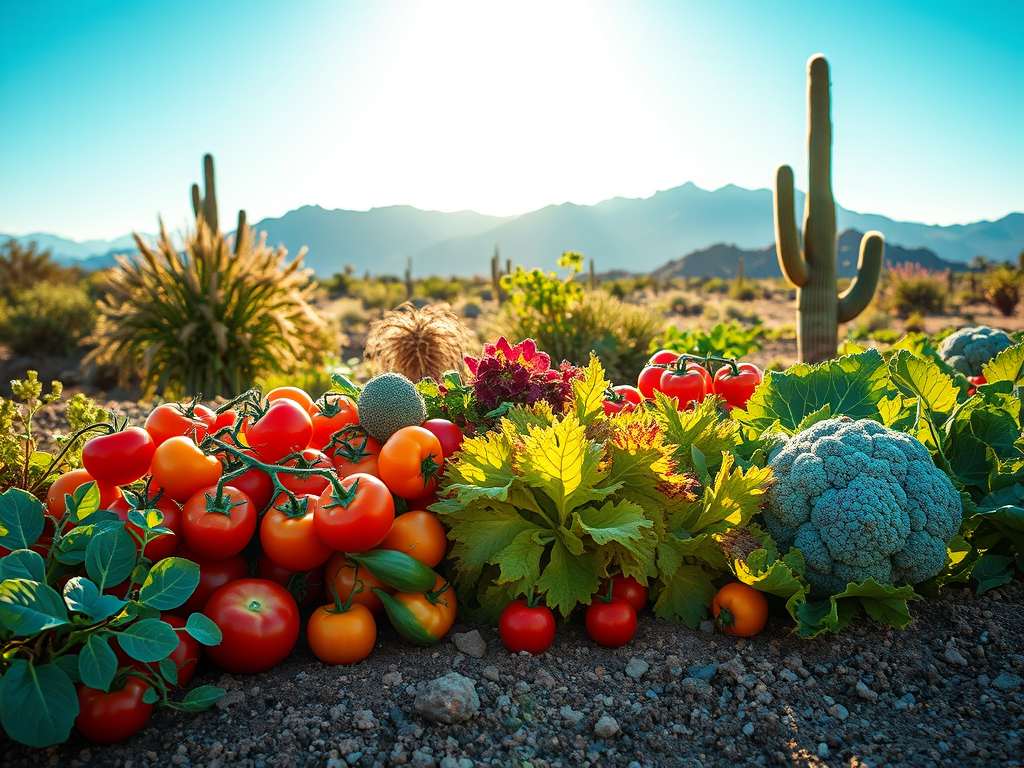
In the sun-drenched low desert of Arizona, including San Tan Valley, Queen Creek, and Florence, growing vegetables is both a rewarding and challenging endeavor. The region’s hot summers, mild winters, and limited rainfall (8-12 inches annually) create unique conditions that require careful timing and plant selection. With two primary growing seasons—spring and fall—gardeners can enjoy a bountiful harvest year-round by choosing the right vegetables and planting at optimal times. This guide, informed by the University of Arizona Cooperative Extension and Pinal County Master Gardeners, provides a seasonal planting calendar and practical tips to help you cultivate a thriving vegetable garden in Arizona’s arid climate.
Understanding Arizona’s Growing Seasons
Arizona’s low desert, encompassing Pinal County (USDA Hardiness Zones 9-10B), features two distinct growing seasons due to its extreme temperatures and short frost periods:
- Spring Season (February-April): Ideal for warm-season vegetables that thrive in mild temperatures but need to mature before the intense summer heat (100°F+). Examples include tomatoes, peppers, and corn.
- Fall Season (September-November): Perfect for cool-season vegetables that prefer cooler temperatures and can tolerate light frost, such as lettuce, broccoli, and carrots. Some crops extend into winter.
Elevation significantly impacts planting schedules. San Tan Valley, Queen Creek, and Florence, at elevations of 1,000-2,000 feet, align with low desert planting dates. Higher elevations (above 3,000 feet) have a single main season in spring/early summer, with limited fall planting. This guide focuses on low desert conditions, as outlined by the University of Arizona Cooperative Extension’s planting calendars (Vegetable Planting Calendar).
Vegetable Planting Guide
Below is a curated selection of vegetables well-suited for Arizona’s low desert, divided into cool-season and warm-season crops. Each includes the best planting method, optimal planting dates for San Tan Valley, Queen Creek, and Florence, time to harvest, and practical tips, drawn from the University of Arizona Cooperative Extension and Growing In The Garden.
Cool-Season Vegetables (Fall Planting for Winter/Early Spring Harvest)
These crops thrive in cooler temperatures and can tolerate light frost, making them ideal for fall planting.
| Vegetable | Planting Method | Planting Dates | Time to Harvest | Tips |
|---|---|---|---|---|
| Beets | Seed | Sep 15 – Mar 1 | 60-80 days | Tolerates frost; plant every 2-3 weeks for continuous harvest. Thin seedlings to 3-4 inches apart (Beets Guide). |
| Broccoli | Seed or Transplant | Sep 15 – Nov 15 (seed), Sep 15 – Jan 15 (transplant) | 120-130 days (seed), 80-90 days (transplant) | Harvest side shoots after main head; choose heat-tolerant varieties (Broccoli Guide). |
| Cabbage | Seed or Transplant | Sep 15 – Nov 15 (seed), Sep 15 – Jan 15 (transplant) | 120-130 days (seed), 80-90 days (transplant) | Avoid heat or severe frost to prevent splitting; use shade cloth if needed (Cabbage Guide). |
| Carrots | Seed | Sep 15 – Mar 1 | 60-100 days | Thin to 2-3 inches apart; harvest before summer heat to avoid bitterness (Carrots Guide). |
| Lettuce | Seed or Transplant | Sep 15 – Jan 15 | 50-100 days | Use cut-and-come-again method; bolts in heat, so plant early (Lettuce Guide). |
| Kale | Seed or Transplant | Sep 15 – Dec 15 | 60-90 days | Harvest outer leaves for continuous growth; frost improves flavor (Kale Guide). |
| Spinach | Seed | Sep 15 – Jan 15 | 45-60 days | Plant every 2 weeks for steady supply; prefers cooler temperatures (Spinach Guide). |
Warm-Season Vegetables (Spring Planting for Summer Harvest)
These crops require warm soil and air temperatures and are planted in spring to avoid frost and extreme summer heat.
| Vegetable | Planting Method | Planting Dates | Time to Harvest | Tips |
|---|---|---|---|---|
| Tomatoes | Transplant | Jan 1 – Mar 15 | 70-90 days | Choose heat-tolerant varieties (e.g., Celebrity); stake or cage for support (Tomatoes Guide). |
| Peppers | Transplant | Feb 1 – Apr 1 | 70-120 days | Support larger varieties; harvest when fully colored for best flavor (Peppers Guide). |
| Corn | Seed | Feb 15 – Mar 15, Jul 30 – Aug 30 | 70-90 days | Plant in blocks for pollination; harvest when silks turn brown (Corn Guide). |
| Beans (Snap) | Seed | Feb 15 – Mar 15, Aug 1 – Sep 1 | 60-90 days | Harvest young for tenderness; frequent picking boosts production (Beans Guide). |
| Cucumbers | Seed | Feb 15 – Apr 1, Aug 15 – Sep 15 | 60-90 days | Choose short-season varieties; summer heat may cause bitterness (Cucumbers Guide). |
| Squash (Summer) | Seed | Feb 15 – Apr 1, Aug 1 – Sep 1 | 50-60 days | Harvest young; plant in hills for drainage (Squash Guide). |
| Melons (Cantaloupe, Watermelon) | Seed | Feb 15 – Jul 15 | 80-120 days | Use native-adapted varieties; provide ample space for vines (Cantaloupe Guide). |
Tips for Successful Vegetable Gardening in Arizona
To ensure a thriving garden in Pinal County’s arid climate, follow these expert-backed tips:
- Site Selection: Choose a location with at least 6-8 hours of sunlight daily, avoiding areas near trees or shrubs that compete for water and nutrients (Ten Steps Guide).
- Soil Preparation: Arizona’s native soil is often alkaline (pH 6.5-8.5) and low in organic matter. Amend with compost or well-rotted manure to improve fertility and drainage. Raised beds with a mix of compost, coconut coir, and vermiculite are ideal (Growing In The Garden).
- Watering: Use drip irrigation to deliver water directly to roots, minimizing evaporation. Water deeply but infrequently (e.g., 1-2 inches weekly for most vegetables) to encourage strong roots (Drip Irrigation Guide).
- Mulching: Apply organic mulch (e.g., straw, bark) or inorganic mulch (e.g., gravel) to retain moisture, suppress weeds, and regulate soil temperature.
- Pest and Disease Management: Common pests include aphids, whiteflies, and spider mites. Use integrated pest management (IPM) with beneficial insects (e.g., ladybugs) or organic sprays like neem oil. Delay fall planting until whitefly populations decline in cooler weather (Vegetable Planting Calendar).
- Weed Control: At Franciscan Landscape, we use ethical, environmentally safe methods, applying 10% vinegar to kill existing weeds and corn gluten meal to prevent germination, ensuring safety for your family and pets.
- Harvesting and Storage: Harvest at peak ripeness for optimal flavor. Store vegetables like carrots and beets in cool, humid conditions to extend shelf life.
Local Resources and Support
Pinal County gardeners have access to robust resources from the University of Arizona Cooperative Extension and Pinal County Master Gardeners:
- Demonstration Garden: Visit the Maricopa Agricultural Center (37860 W. Smith-Enke Rd, Maricopa, AZ) to see vegetable gardening techniques in action (Pinal County Master Gardeners).
- Plant Helpline: Call (520) 836-5221 x0 for free, expert advice on vegetable selection and care.
- Workshops: Attend classes like the Casa Grande Master Gardener Course starting February 13, 2025, for hands-on learning (Pinal County Master Gardeners).
- Publications: Explore the Arizona Master Gardener Manual and vegetable gardening guides at UA Cooperative Extension.
Conclusion
Growing vegetables in Arizona’s low desert, including San Tan Valley, Queen Creek, and Florence, is achievable with proper timing and care. By planting cool-season crops in fall and warm-season crops in spring, and using water-efficient techniques like drip irrigation, you can enjoy a productive garden year-round. Leverage the expertise of the Pinal County Master Gardeners and the University of Arizona Cooperative Extension to start your vegetable garden today. Visit the Maricopa Agricultural Center or call the Plant Helpline to turn your backyard into a thriving food source!
 Franciscan Landscape