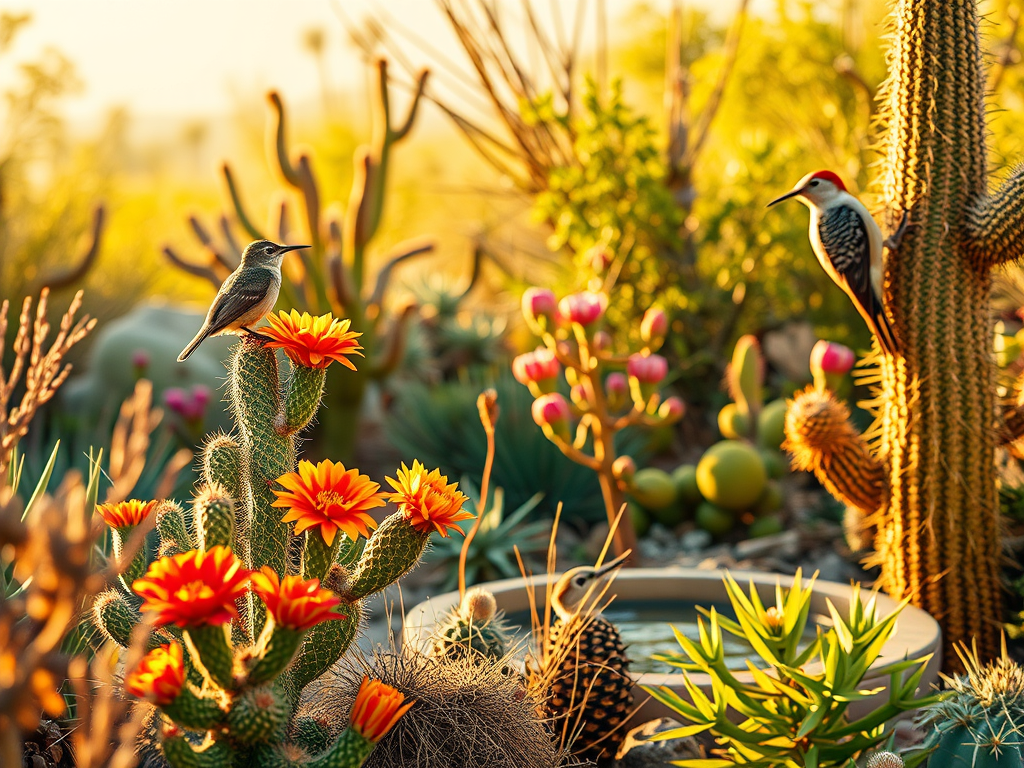
Creating a bird-friendly garden in San Tan Valley, Queen Creek, and Florence, Arizona, transforms your outdoor space into a vibrant sanctuary for local wildlife. By providing food, water, and shelter, you can attract iconic desert species like the Cactus Wren, Anna’s Hummingbird, and Gila Woodpecker, enhancing biodiversity and bringing nature’s beauty to your doorstep. In Pinal County’s arid low desert (USDA Hardiness Zones 9-10B), where hot summers and low rainfall (8-12 inches annually) shape the environment, thoughtful planning is key. This guide, informed by the University of Arizona Cooperative Extension and Pinal County Master Gardeners, offers practical tips to create habitats and provide resources to attract local bird species, fostering a sustainable and thriving ecosystem.
Benefits of Attracting Birds
Attracting birds to your garden offers numerous ecological and personal benefits:
- Pest Control: Birds like sparrows, finches, and woodpeckers consume insects such as aphids and beetles, reducing the need for chemical pesticides.
- Pollination: Hummingbirds, like Anna’s Hummingbird, pollinate flowers while feeding on nectar, supporting plant reproduction.
- Seed Dispersal: Birds disperse seeds of native plants, promoting biodiversity and ecosystem health.
- Aesthetic and Emotional Value: Birdwatching provides relaxation, joy, and educational opportunities for all ages.
- Conservation: Urban and suburban gardens in Pinal County provide critical habitats for birds facing habitat loss, supporting local populations.
By fostering a bird-friendly garden, you contribute to the ecological balance and conservation efforts in Arizona’s low desert.
Common Bird Species in Pinal County
Pinal County, part of Arizona’s low desert, hosts a diverse array of bird species, many of which can be attracted to residential gardens. According to the Pinal County Birding Trail (Pinal County Birding Trail), the region supports 422 bird species throughout the year. Common species likely to visit your garden include:
| Bird Species | Description | Habitat Preference |
|---|---|---|
| Cactus Wren | Arizona’s state bird, known for its bold song and nesting in cacti. | Desert landscapes, scrub |
| Anna’s Hummingbird | Small, vibrant, attracted to nectar-rich flowers and feeders. | Gardens, urban areas |
| Gila Woodpecker | Drills into cacti for nesting, feeds on insects and fruit. | Desert, saguaro stands |
| Greater Roadrunner | Ground-dwelling, iconic for its running behavior. | Open desert, grasslands |
| White-winged Dove | Common in urban areas, frequents seed feeders. | Urban, suburban gardens |
| Curve-billed Thrasher | Distinctive curved bill, sings melodically. | Desert scrub, gardens |
| Common Raven | Large, intelligent, feeds on a variety of foods. | Open country, fields |
These species, noted in sources like Bird Watching Academy (Birds in Arizona) and Avian Report (Backyard Feeder Birds), are well-suited to garden environments with proper resources.
Tips for Attracting Birds
To create a welcoming habitat for birds in San Tan Valley, Queen Creek, and Florence, focus on providing food, water, shelter, and a safe environment. The following tips, inspired by the University of Arizona Cooperative Extension’s “Backyard Bird Feeding” guide (Backyard Bird Feeding), are tailored to Arizona’s low desert climate:
1. Provide Food
Different birds have varied dietary preferences, so offering diverse food sources is essential:
- Feeders: Select feeders based on the birds you want to attract:
- Ground Feeders: Place 10 feet from trees or shrubs to attract doves, juncos, sparrows, towhees, goldfinches, and cardinals. Ideal for White-winged Doves.
- Tube Feeders: Hang 5 feet off the ground near a window for chickadees, titmice, nuthatches, goldfinches, siskins, and house finches.
- Suet Feeders: Hang 5 feet above ground near other feeders, popular in winter for woodpeckers like the Gila Woodpecker.
- Hopper Feeders: Position on a pole 5 feet off the ground for larger birds like jays, grackles, red-winged blackbirds, and cardinals.
- Thistle (Nyjer) Feeders: Designed for small-beaked finches like goldfinches and pine siskins.
- Seeds: Use high-quality bird seed, such as black oil sunflower seeds, striped sunflower, white proso millet, safflower, and raw peanuts. Avoid low-quality mixes with fillers like milo or red millet, which many birds reject. “Wasteless” blends reduce mess under feeders.
- Nectar for Hummingbirds: Provide nectar feeders with a 4:1 water-to-white sugar solution (no honey, artificial sweeteners, or red dye). Clean feeders regularly to prevent mold, especially in Arizona’s heat.
- Seasonal Feeding: Winter is critical for feeding when natural food is scarce, but spring and summer attract migratory and nesting birds like hummingbirds.
2. Provide Water
Water is vital in Arizona’s arid climate, where natural sources are limited:
- Birdbaths: Install a shallow birdbath (1-2 inches deep) with a rough surface for grip. Place it in an open area with nearby cover for safety. Change water daily to prevent stagnation and mosquito breeding.
- Fountains or Drips: Moving water, such as a drip system or small fountain, attracts more birds, including hummingbirds and thrashers. Ensure the water source is low-maintenance and safe.
- Maintenance: Clean birdbaths twice monthly with a 9:1 water-to-bleach solution (10% bleach) to prevent disease, as recommended by the Cooperative Extension.
3. Provide Shelter
Shelter offers birds safety, nesting sites, and food sources:
- Native Plants: Plant native species adapted to Pinal County’s climate, providing food and cover with minimal water. Recommended plants include:
- Desert Willow (Chilopsis linearis): Nectar-rich flowers attract hummingbirds.
- Palo Verde (Parkinsonia spp.): Seeds and shade for doves and thrashers.
- Mesquite (Prosopis spp.): Seeds and nesting sites for ravens and woodpeckers.
- Desert Marigold (Baileya multiradiata): Seeds for finches and sparrows.
- Penstemon (Penstemon spp.): Nectar for hummingbirds.
- Birdhouses: Install birdhouses for cavity-nesters like Gila Woodpeckers and wrens. Ensure proper sizing (e.g., 1.25-inch entrance for wrens) and placement (5-10 feet high, facing away from prevailing winds).
- Dense Shrubs: Plant or maintain dense shrubs like Texas sage for cover from predators and harsh weather.
4. Maintain a Safe Environment
A safe garden ensures birds thrive:
- Avoid Pesticides: Pesticides harm birds and their insect food sources. Use natural pest control, such as neem oil or beneficial insects like ladybugs.
- Window Safety: Prevent collisions by applying decals, screens, or netting to windows, especially near feeders or birdbaths.
- Cat Predation: Keep cats indoors, as they pose a significant threat to birds. The Cooperative Extension notes that free-roaming cats are a leading cause of bird mortality.
- Weed Control: At Franciscan Landscape, we use ethical, environmentally safe methods, applying 10% vinegar to kill existing weeds and corn gluten meal to prevent germination, ensuring safety for birds, families, and pets.
5. Maintenance and Seasonal Considerations
- Feeder and Birdbath Cleaning: Clean feeders and birdbaths twice monthly with a 10% bleach solution to prevent disease transmission. Spread multiple feeders to reduce congestion.
- Seasonal Adjustments: Winter feeding supports resident birds like Cactus Wrens, while spring and summer attract migrants like Anna’s Hummingbirds. Adjust seed types and nectar availability accordingly.
- Native Plant Care: Water native plants deeply but infrequently to establish roots, reducing maintenance over time, as advised by the Cooperative Extension.
Local Resources and Support
Pinal County gardeners have access to robust resources to enhance their bird-friendly gardens:
- Pinal County Master Gardeners:
- Contact the Plant Helpline (520-836-5221) for advice on native plants and bird-friendly landscaping.
- Visit the demonstration garden at the Maricopa Agricultural Center (37860 W. Smith-Enke Rd, Maricopa, AZ) to see native plants in action (Pinal County Master Gardeners).
- Attend workshops, such as the Casa Grande Master Gardener Course starting February 13, 2025.
- University of Arizona Cooperative Extension:
- Explore gardening and wildlife resources at Home Gardening.
- Access the “Backyard Bird Feeding” guide for detailed feeder and seed recommendations (Backyard Bird Feeding).
- Pinal County Birding Trail:
- Discover local birding hotspots like the GRIC Gilbert Rd Agricultural Ponds for inspiration (Pinal County Birding Trail).
- Audubon Resources:
- Refer to the Audubon Guide to Bird Feeding for additional tips (Audubon Bird Feeding).
- Learn about creating hummingbird-friendly yards (Hummingbird Yard).
Conclusion
Attracting birds to your garden in San Tan Valley, Queen Creek, and Florence is a rewarding way to connect with nature and support local wildlife. By providing diverse feeders, clean water, native plants, and a safe environment, you can welcome species like the Cactus Wren, Anna’s Hummingbird, and Gila Woodpecker to your yard. With guidance from the Pinal County Master Gardeners and the University of Arizona Cooperative Extension, start small with a birdbath or native plant, and watch your garden come alive with feathered visitors. Visit the Maricopa Agricultural Center or call the Plant Helpline to begin your bird-friendly journey today!
 Franciscan Landscape