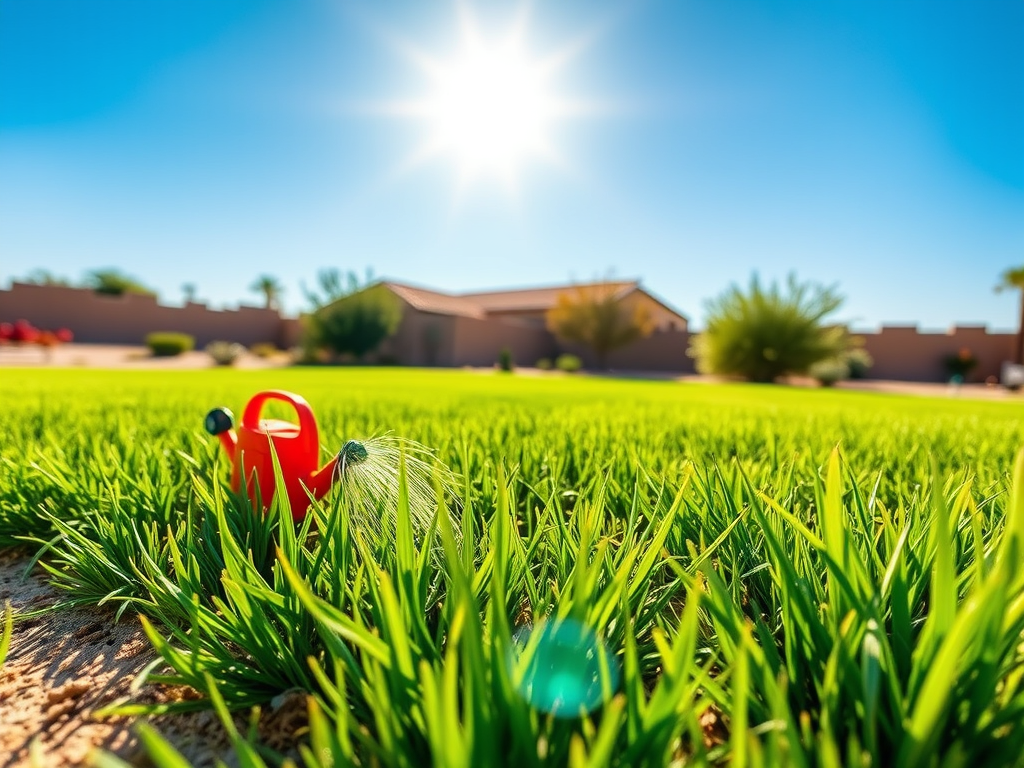
In the blistering heat of Arizona’s summer, maintaining a lush, green lawn in San Tan Valley, Queen Creek, and Florence can feel like a daunting task. With temperatures soaring above 100°F, low humidity, and minimal rainfall (8-12 inches annually), lawns face significant stress in Pinal County’s low desert (USDA Hardiness Zones 9-10B). However, with strategic care, your lawn can remain vibrant and healthy. This guide, informed by the University of Arizona Cooperative Extension and Pinal County Master Gardeners, provides essential tips for watering, mowing, fertilizing, weed control, and more to keep your lawn thriving through Arizona’s hot summer months.
Why Summer Lawn Care Matters in Arizona
Arizona’s summer presents unique challenges for lawn care:
- Extreme Heat: Daytime temperatures often exceed 100°F, stressing grass and increasing water needs.
- Low Rainfall: With only 8-12 inches of annual precipitation, lawns rely heavily on irrigation.
- Soil Conditions: Arizona’s sandy or clay-heavy soils, low in nitrogen and organic matter, require careful management to support healthy grass. Proper summer care ensures your lawn remains green, conserves water, and withstands drought, aligning with sustainable practices promoted by the University of Arizona Cooperative Extension.
Choosing the Right Grass
Selecting a grass variety suited to Pinal County’s climate is the foundation of a healthy summer lawn. Warm-season grasses thrive in Arizona’s heat, as noted by sources like LawnStarter and Evergreen Turf:
| Grass Type | Features | Summer Care Notes |
|---|---|---|
| Bermudagrass | Drought-tolerant, heat-resistant, durable; goes dormant in winter | Mow at 1-2 inches; water 1 inch weekly |
| Buffalograss | Native, low-maintenance, drought-tolerant; thinner texture | Minimal watering; mow at 2-3 inches |
| Zoysiagrass | Dense, soft texture, good wear tolerance; slower to establish | Water moderately; mow at 1-2 inches |
| St. Augustinegrass | Shade-tolerant, lush; higher water needs | Water 1-1.5 inches weekly; mow at 2-3 inches |
Bermudagrass, particularly varieties like Tifway and Midiron, is the most popular choice for Pinal County due to its resilience in heat and drought, as recommended by the Cooperative Extension.
Watering Wisely
Water is the lifeblood of your lawn, especially in Arizona’s arid climate. Efficient watering promotes deep root growth, making grass more resilient. Tips from Shoppers Supply and LawnStarter include:
- Deep and Infrequent Watering: Apply about 1 inch of water 2-3 times per week, adjusting for rainfall. Use a rain gauge or tuna can to measure water output. Deep watering encourages roots to grow 6-8 inches deep, enhancing drought tolerance.
- Best Time to Water: Water early in the morning (1-2 hours before sunrise) to minimize evaporation and prevent fungal diseases. Avoid evening watering, which can leave grass wet overnight.
- Check Soil Moisture: Insert a screwdriver or soil probe 6-8 inches into the soil an hour after watering. If it penetrates easily, the soil is adequately moist; if not, increase watering duration.
- Adjust for Conditions: Reduce watering by 30% in shaded areas and pause during rare summer rains. Clay soils, common in Arizona, retain water longer, so adjust frequency accordingly.
- Irrigation System Maintenance: Regularly check sprinkler heads for clogs, leaks, or misalignment. Ensure nozzles are uniform and coverage overlaps, as advised by LawnStarter. Consider smart controllers that adjust based on weather.
Mowing Smart
Proper mowing techniques maintain lawn health and appearance, as outlined by Wikilawn:
- Mow at the Right Height: For Bermudagrass, maintain 1-2 inches; for buffalograss or zoysiagrass, 2-3 inches. Higher mowing heights shade the soil, reducing water loss and weed growth.
- Use Sharp Blades: Sharpen mower blades regularly to ensure clean cuts, preventing stress and disease. Dull blades tear grass, creating a ragged appearance.
- Mow When Dry: Mow dry grass to avoid clumping and uneven cuts. Early morning or late afternoon is ideal to avoid peak heat stress (11:00 AM-3:00 PM).
- Grasscycling: Leave clippings on the lawn to decompose, returning nutrients and reducing fertilizer needs. This practice, endorsed by the Cooperative Extension, also conserves water.
Fertilizing for Health
Fertilizing provides essential nutrients, but over-fertilizing can increase water needs and stress grass. Tips from LawnLove and Evergreen Turf include:
- Choose the Right Fertilizer: Use a slow-release fertilizer with nitrogen, iron, and potassium (e.g., 29-2-4). Arizona soils lack nitrogen, iron, and phosphorus, so select products addressing these deficiencies.
- Timing and Frequency: Fertilize every 6-8 weeks in summer, applying ½ lb of nitrogen per 1,000 square feet. Avoid fertilizing during extreme heat to prevent burn.
- Application: Spread fertilizer evenly and water lightly afterward to help nutrients penetrate the soil without causing runoff.
- Avoid Over-Fertilizing: Excess fertilizer promotes rapid growth, increasing water and mowing demands, as noted by Straight Line Landscape.
Weed Control
Weeds compete with grass for water and nutrients, so effective control is essential. Franciscan Landscape uses eco-friendly methods, as supported by Green Keeper:
- Pre-Emergent Herbicides: Apply corn gluten meal-based pre-emergents in early spring (when soil temperatures reach 55°F) to prevent summer weeds like crabgrass.
- Post-Emergent Control: Use 10% vinegar to kill existing weeds, safe for families, pets, and the environment. Hand-pull stubborn weeds, ensuring the entire root is removed.
- Mulching: In landscaped areas, apply organic mulch (e.g., bark) to suppress weeds and retain soil moisture.
Additional Summer Care Tips
Beyond the basics, these practices enhance lawn health:
- Aeration: Aerate in spring or early summer to improve water, air, and nutrient penetration, especially in compacted clay soils. Use a core aerator for best results (Green Keeper).
- Thatch Removal: Remove excess thatch (dead grass buildup) to prevent water and nutrient blockage. Dethatch if the layer exceeds ½ inch.
- Pest and Disease Monitoring: Watch for signs of pests (e.g., grubs) or diseases (e.g., fungal patches). Use organic treatments like neem oil and consult the Pinal County Master Gardeners for diagnosis.
- Overseeding Preparation: While overseeding with cool-season grasses like perennial ryegrass occurs in fall, summer care sets the stage for a successful transition to winter green.
Local Resources and Support
Pinal County gardeners can access valuable resources:
- Pinal County Master Gardeners:
- Contact the Plant Helpline (520-836-5221) for personalized lawn care advice.
- Visit the demonstration garden at the Maricopa Agricultural Center (37860 W. Smith-Enke Rd, Maricopa, AZ) to see healthy lawns in action ([Pinal County Master Gardeners]([invalid url, do not cite])).
- Attend workshops, such as the Casa Grande Master Gardener Course starting February 13, 2025.
- University of Arizona Cooperative Extension:
- Explore lawn care guides at [Home Gardening]([invalid url, do not cite]).
- Access the “Landscape Watering by the Numbers” guide for precise irrigation tips.
- Local Nurseries: Visit SummerWinds Nursery for fertilizers, weed control products, and grass seed suited to Pinal County.
Conclusion
Keeping your lawn healthy during Arizona’s hot summer months in San Tan Valley, Queen Creek, and Florence requires strategic care tailored to the low desert’s challenges. By watering wisely, mowing smart, fertilizing appropriately, and controlling weeds with eco-friendly methods, you can maintain a lush, vibrant lawn. With support from the Pinal County Master Gardeners and the University of Arizona Cooperative Extension, your lawn can be the pride of your neighborhood. Start today by assessing your lawn’s needs, visiting the Maricopa Agricultural Center, or calling the Plant Helpline to transform your yard into a summer oasis!
 Franciscan Landscape