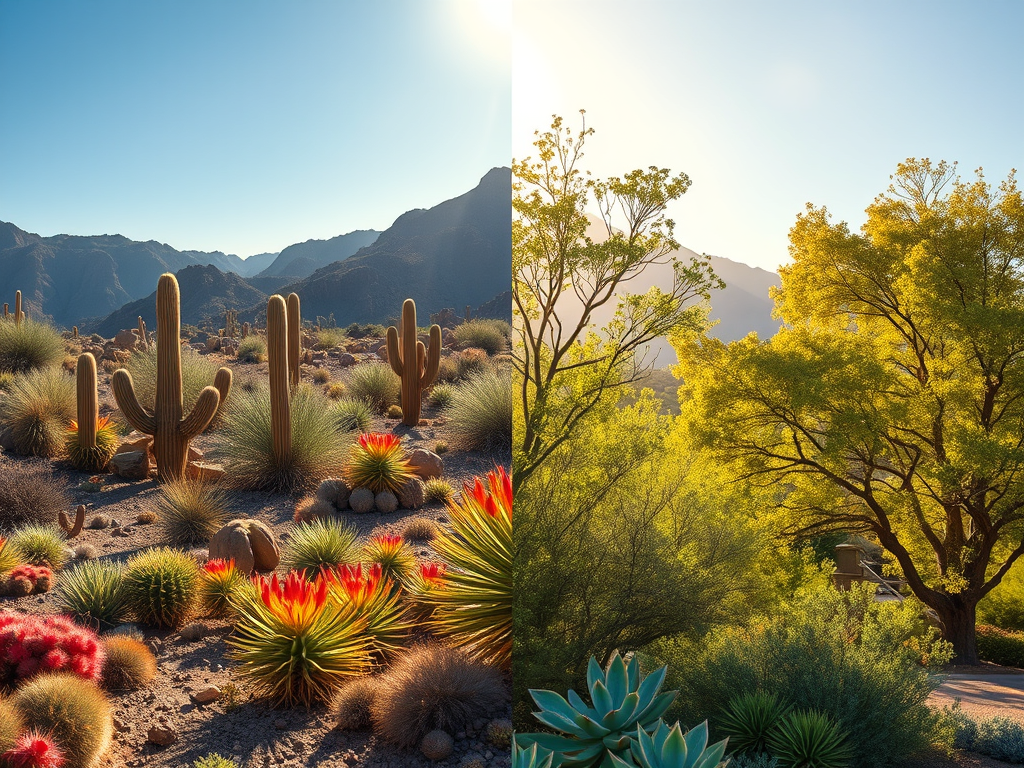
Gardening in Arizona’s diverse landscapes, from the scorching low deserts of San Tan Valley, Queen Creek, and Florence to the cooler high elevations, requires careful plant selection to ensure success. Plant hardiness zones, defined by the USDA based on average annual minimum winter temperatures, are a critical tool for choosing plants that can withstand your local climate. In Pinal County’s low desert (USDA Hardiness Zones 9a-10b), where heat and aridity dominate, understanding these zones is key to creating a thriving garden. This guide, informed by the University of Arizona Cooperative Extension and Pinal County Master Gardeners, explains Arizona’s hardiness zones and offers practical tips for selecting plants that flourish in your specific climate.
What Are Plant Hardiness Zones?
Plant hardiness zones are geographical areas defined by the United States Department of Agriculture (USDA) to indicate the average annual extreme minimum winter temperature. Each zone represents a 10-degree Fahrenheit difference, with half-zones (e.g., 9a, 9b) indicating 5-degree increments. For example:
- Zone 9a: 20-25°F
- Zone 10b: 35-40°F
The USDA Plant Hardiness Zone Map, updated in 2023 to reflect climate change and warmer temperatures, is the standard tool for gardeners. It helps identify plants likely to survive winter lows, ensuring long-term garden success. In Arizona, zones range from 5b in high-elevation areas to 10b in the hottest deserts, reflecting the state’s diverse climates.
Arizona’s Hardiness Zones
Arizona’s climate varies significantly due to elevation and rainfall, creating a wide range of hardiness zones:
- Zones 5b-6b (High Elevations): Found in northern areas like the White Mountains (e.g., Show Low), with minimum temperatures of -15 to -5°F. These colder zones support plants needing chill hours.
- Zones 7a-8b (Mid-Elevations): Common in areas like Prescott and Flagstaff, with minimums of 0-20°F. These zones allow for a broader plant variety, including deciduous trees and cool-season crops.
- Zones 9a-10b (Low Deserts): Encompassing San Tan Valley, Queen Creek, Florence, Phoenix, and Tucson, with minimums of 20-40°F. These warm zones are ideal for heat-tolerant, drought-resistant plants.
Pinal County, including San Tan Valley, Queen Creek, and Florence, falls primarily in zones 9a-10b, characterized by hot summers, mild winters, and low rainfall (8-12 inches annually). Microclimates, influenced by urban heat, shade, or elevation, can slightly alter conditions within these zones.
Finding Your Hardiness Zone
To choose the right plants, first determine your specific zone:
- USDA Interactive Map: Visit planthardiness.ars.usda.gov and enter your zip code or click your location to find your zone. The 2023 map accounts for recent climate shifts, ensuring accuracy.
- Local Resources: Contact the Pinal County Master Gardeners’ Plant Helpline (520-836-5221) or visit local nurseries like SummerWinds for zone-specific advice.
- Observe Your Garden: Note microclimates, such as warmer areas near south-facing walls or cooler shaded spots, which may allow flexibility in plant choices.
Choosing Plants for Your Zone
Selecting plants that match your hardiness zone ensures they can survive winter lows and thrive in Arizona’s climate. Below are recommendations tailored to Arizona’s zones, drawn from sources like Moon Valley Nurseries and the University of Arizona Cooperative Extension:
| Zone | Region | Plant Types | Examples |
|---|---|---|---|
| 5b-6b | High Elevations (e.g., White Mountains) | Cold-hardy fruit trees, perennials, vegetables | Apples, pears, cherries, delphiniums, columbines, kale, carrots |
| 7a-8b | Mid-Elevations (e.g., Prescott, Flagstaff) | Deciduous trees, perennials, cool-season crops | Maples, oaks, peaches, lavender, salvia, broccoli, lettuce |
| 9a-10b | Low Deserts (e.g., San Tan Valley, Queen Creek, Florence) | Cacti, succulents, native shrubs, heat-tolerant vegetables | Saguaro, agave, desert willow, palo verde, tomatoes, peppers, rosemary, thyme |
Zones 9a-10b (Low Deserts)
- Cacti and Succulents: Saguaro, barrel cactus, and agave thrive in heat and require minimal water, perfect for Pinal County’s arid conditions.
- Native Shrubs: Desert willow, palo verde, and Texas sage provide shade, attract pollinators, and tolerate drought.
- Vegetables: Plant heat-tolerant crops like tomatoes, peppers, eggplants, and okra in spring (February-April) or cool-season crops like lettuce and broccoli in fall (September-November).
- Herbs: Rosemary, thyme, and oregano are drought-tolerant and add culinary value.
Zones 7a-8b (Mid-Elevations)
- Deciduous Trees: Maples, oaks, and fruit trees like peaches and apricots grow well with moderate water.
- Perennials: Lavender, salvia, and yarrow add color and attract bees and butterflies.
- Vegetables: Broccoli, cauliflower, and lettuce thrive in cooler winters, while summer crops include tomatoes and peppers.
Zones 5b-6b (High Elevations)
- Fruit Trees: Apples, pears, and cherries benefit from cold winters, requiring chill hours for fruit production.
- Perennials: Delphiniums, columbines, and coneflowers offer vibrant blooms.
- Vegetables: Hardy crops like kale, carrots, and peas excel in cooler climates.
Additional Considerations
Hardiness zones are a starting point, but other factors influence plant success in Arizona:
- Water Needs: Prioritize drought-tolerant plants like cacti or native shrubs to conserve water. Use drip irrigation for efficiency, delivering 1-2 inches weekly ([Drip Irrigation Guide]([invalid url, do not cite]/sites/extension.arizona.edu/files/pubs/az1392-2023.pdf)).
- Sunlight: Arizona’s intense sunlight requires plants that tolerate full sun or partial shade for sensitive species.
- Soil Type: Low desert soils are often alkaline (pH 7.5-8.5) and low in organic matter (<1%). Test soil and amend with compost or sulfur to improve fertility and adjust pH ([Soil Testing Lab]([invalid url, do not cite]/laboratories-conducting-soil-plant-feed-or-water-testing)).
- Microclimates: South-facing walls or urban areas may be warmer, allowing plants from a higher zone, while shaded areas may support cooler-zone plants.
Local Resources
Pinal County gardeners can access expert support:
- Pinal County Master Gardeners: Call the Plant Helpline (520-836-5221) or visit the Maricopa Agricultural Center’s demonstration garden (37860 W. Smith-Enke Rd, Maricopa, AZ) for zone-specific plant advice and workshops like the Casa Grande Master Gardener Course (February 13, 2025) ([Pinal County Master Gardeners]([invalid url, do not cite]/pinal-county-master-gardener-program)).
- University of Arizona Cooperative Extension: Explore plant selection guides at extension.arizona.edu or refer to “Arizona Climate Zones and their Application to Growing Plants” ([extension.arizona.edu]([invalid url, do not cite]/publication/arizona-climate-zones-and-their-application-growing-plants)).
- Local Nurseries: SummerWinds Nursery and Moon Valley Nurseries offer plants suited to Pinal County’s zones ([SummerWinds Nursery]([invalid url, do not cite]), [Moon Valley Nurseries]([invalid url, do not cite]/planting-zones-az)).
- AMWUA: The Arizona Municipal Water Users Association provides a plant database for low desert zones ([AMWUA Plants]([invalid url, do not cite])).
Conclusion
Understanding plant hardiness zones empowers gardeners in San Tan Valley, Queen Creek, and Florence to create thriving, sustainable gardens. By selecting plants suited to zones 9a-10b, such as cacti, desert willow, or tomatoes, and considering water, sunlight, and soil needs, you can ensure success. Leverage the USDA’s 2023 map and local resources like the Pinal County Master Gardeners and University of Arizona Cooperative Extension to choose the perfect plants. Start your gardening journey today—visit the Maricopa Agricultural Center or call the Plant Helpline to bring your garden to life!
 Franciscan Landscape