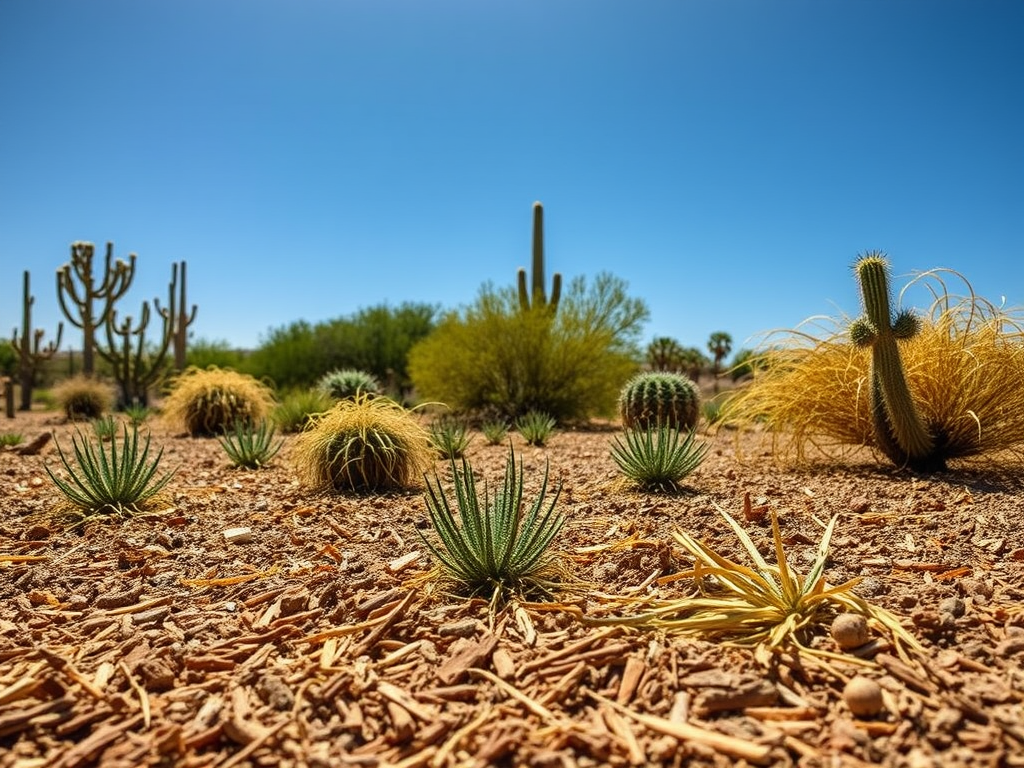
guide, informed by the University of Arizona Cooperative Extension and Pinal County Master Gardeners, explores the benefits of mulching, best practices for Arizona’s low desert, and how these differ from eastern U.S. methods, ensuring a thriving, sustainable garden.
Why Mulch in Arizona?
In Arizona’s low desert, where summer temperatures exceed 100°F and rainfall is scarce, mulching is essential for maintaining healthy gardens. Mulch acts as a protective barrier over the soil, addressing challenges like water scarcity, high soil temperatures, and weed proliferation. Unlike the eastern U.S., where abundant rainfall (30-50 inches annually) and milder temperatures prioritize soil enrichment and weed control, Arizona’s mulch choices focus on water conservation and heat protection. By understanding these regional differences, gardeners in San Tan Valley, Queen Creek, and Florence can optimize their landscapes for sustainability and beauty.
Benefits of Mulching
Mulching offers universal benefits, but their importance varies by region:
- Moisture Retention: In Arizona, mulch reduces evaporation by up to 50%, critical for conserving water in the arid climate. In the eastern U.S., mulch helps maintain consistent soil moisture in wetter conditions.
- Weed Suppression: A 2-3 inch layer of mulch blocks sunlight, preventing weed germination. This is vital in Arizona to reduce competition for scarce water, while in the east, it minimizes labor-intensive weeding.
- Soil Temperature Regulation: In Arizona, mulch lowers soil temperatures by 10-30°F, protecting roots from heat stress. In the eastern U.S., it insulates against winter cold and summer heat, stabilizing soil conditions.
- Soil Health Improvement: Organic mulches (e.g., wood chips, compost) decompose, adding nutrients and improving soil structure. This is crucial in Arizona’s nutrient-poor soils (<1% organic matter) but also valuable in the east for enhancing fertility.
- Erosion Control: Mulch protects soil from wind and rare heavy rains in Arizona, while in the east, it mitigates erosion from frequent rainfall.
Mulching in Arizona vs. the Eastern U.S.
Mulching practices differ due to contrasting climates and gardening goals:
| Aspect | Arizona (Low Desert) | Eastern U.S. |
|---|---|---|
| Climate | Hot, arid (8-12 inches rainfall), intense sunlight | Cooler, wetter (30-50 inches rainfall), milder summers |
| Primary Goals | Water conservation, heat protection, weed suppression | Weed control, soil fertility, moisture retention |
| Mulch Types | Organic (wood chips, straw, compost); Inorganic (gravel, rocks) | Primarily organic (bark, straw, leaves, pine needles) |
| Application | 2-3 inches for gardens, 6-8 inches for heavy weed control; avoid plant stems | 2-4 inches, often layered thicker for weed control and soil enrichment |
| Challenges | Avoiding rot from excess moisture, pest attraction (e.g., scorpions) | Managing excess moisture, fungal growth in wet conditions |
| Environmental Focus | Water efficiency, heat tolerance, local sourcing | Soil enrichment, biodiversity, organic matter cycling |
Arizona-Specific Considerations
- Water Conservation: Mulch reduces irrigation needs, critical in Pinal County’s dry climate. Inorganic mulches like gravel are popular for xeriscaping, reflecting desert aesthetics.
- Heat Protection: Organic mulches cool soil, protecting shallow-rooted plants like vegetables. Avoid plastics, which trap heat and break down in Arizona’s intense sunlight.
- Native Plants: Many desert natives (e.g., palo verde) don’t require mulch, as it can restrict root growth. Use mulch selectively for non-native or vegetable gardens.
Eastern U.S. Considerations
- Moisture Retention: Organic mulches like bark or leaves retain moisture in wetter climates, reducing watering frequency.
- Soil Fertility: Decomposing mulches enrich fertile eastern soils, supporting lush lawns and gardens.
- Weed Control: Thicker mulch layers (3-4 inches) are common to combat aggressive weeds in humid conditions.
Best Practices for Mulching in Arizona
To maximize mulching benefits in Pinal County, follow these practices, drawn from the University of Arizona Cooperative Extension and local sources like SummerWinds Nursery:
1. Choose the Right Mulch
- Organic Mulches:
- Wood Chips/Bark: Ideal for vegetable gardens and flower beds, decomposing to enrich soil. Use GardenTime Medium Nuggets or Shredded Western Red Cedar Bark for aesthetic appeal and pest resistance.
- Straw/Hay: Excellent for vegetable gardens, providing 6-8 inches for weed control. Avoid Bermuda grass hay, which may contain weed seeds. GardenStraw Premium Mulch is sustainable and additive-free.
- Compost: Tank’s Fine Composted Mulch, free of weed seeds, is perfect for citrus trees and vegetable beds, enhancing soil health.
- Inorganic Mulches:
- Gravel/Rocks: Common in xeriscapes, they conserve water and require minimal maintenance but don’t enrich soil. Use desert gold or beige granite for a natural look.
- Avoid Plastics: Black plastic, used in some vegetable gardens, traps heat and is impractical in Arizona’s climate, breaking down quickly under intense sunlight.
2. Apply Mulch Correctly
- Depth: Spread 2-3 inches for most gardens, 6-8 inches for heavy weed suppression in vegetable beds. Thinner layers (1 inch) suffice for delicate plants like succulents.
- Placement: Keep mulch 2-4 inches from plant stems and tree trunks to prevent rot and pest issues, a critical concern in Arizona’s dry climate.
- Calculation: Measure garden area (length × width = square feet), convert depth to feet (e.g., 3 inches = 0.25 feet), and multiply for cubic feet. Example: 100 sq ft × 0.25 ft = 25 cu ft. Most mulch bags are 1.5-2 cu ft (SummerWinds Nursery).
3. Maintain Mulch
- Replenish Annually: Organic mulches decompose quickly in Arizona’s heat, requiring yearly replacement. Inorganic mulches like gravel need occasional raking to maintain appearance.
- Monitor Pests: While mulch doesn’t attract termites, excessive layers (>3 inches) may harbor scorpions or bugs seeking moisture. Check regularly and keep mulch thin near structures.
- Combine with Irrigation: Pair mulch with drip irrigation to maximize water efficiency, delivering 1-2 inches weekly to plant roots (Drip Irrigation Guide).
4. Avoid Common Mistakes
- Over-Mulching: Excessive mulch can cause nitrogen deficiencies or root rot. Use nitrogen fertilizer (e.g., 10-10-10) for vegetable gardens if using wood chips or straw.
- Improper Placement: Piling mulch against plant bases invites rot and pests. Maintain a gap around stems and trunks.
- Using Unsuitable Materials: Avoid straw that doesn’t break down quickly (e.g., straw bale) or plastics that trap heat, as noted by Southwest Victory Gardens (tucson.com).
Local Resources
Pinal County gardeners can access expert support:
- Pinal County Master Gardeners: Contact the Plant Helpline (520-836-5221) or visit the Maricopa Agricultural Center’s demonstration garden (37860 W. Smith-Enke Rd, Maricopa, AZ) to see mulching in action. Workshops, like the Casa Grande Master Gardener Course (February 13, 2025), offer hands-on learning (Pinal County Master Gardeners).
- University of Arizona Cooperative Extension: Explore mulching guides at extension.arizona.edu or refer to “What is the Best Mulch?” (cales.arizona.edu).
- Local Nurseries: SummerWinds Nursery offers mulch products like GardenStraw and Tank’s Composted Mulch, tailored to Arizona’s climate (SummerWinds Nursery).
- AMWUA: Provides water-saving tips and plant lists compatible with mulching (AMWUA).
Conclusion
Mulching is a powerful tool for gardeners in San Tan Valley, Queen Creek, and Florence, enhancing soil health, conserving water, and reducing weeds in Arizona’s arid low desert. By choosing organic mulches like wood chips or inorganic options like gravel, applying them correctly, and understanding regional differences from the eastern U.S., you can create a thriving, sustainable garden. With support from the Pinal County Master Gardeners and University of Arizona Cooperative Extension, start mulching today—visit the Maricopa Agricultural Center or call the Plant Helpline to transform your garden!
 Franciscan Landscape