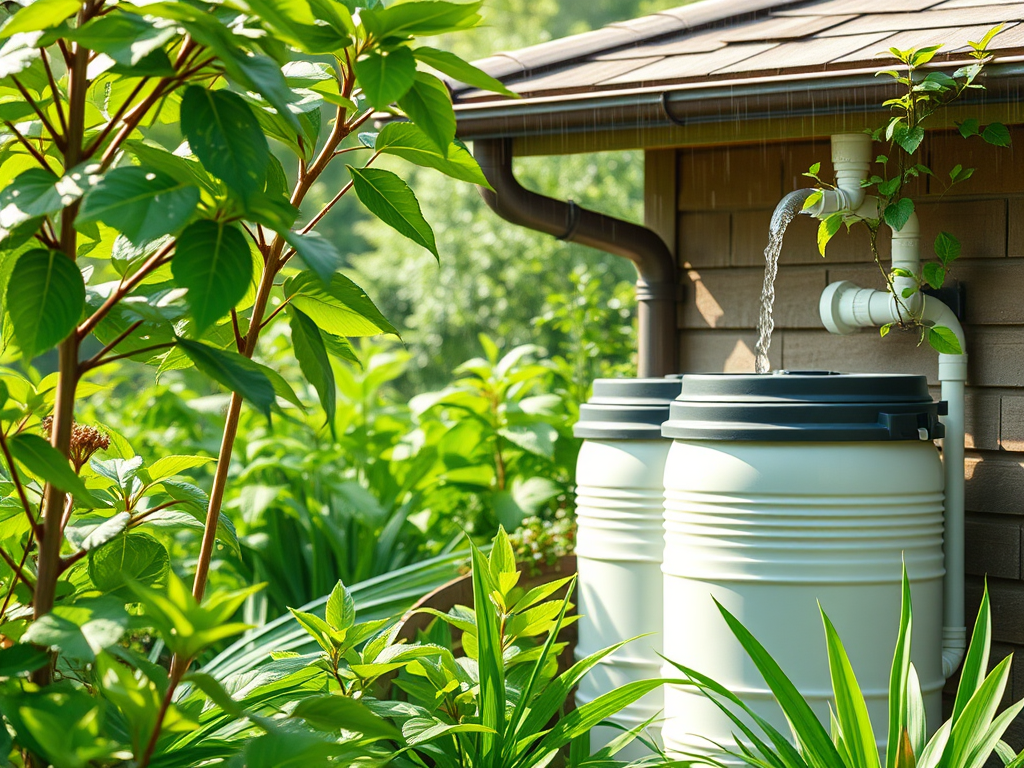
Setting up a rainwater harvesting system is straightforward and can be tailored to your garden’s size and needs. Here are the key steps, adapted from the University of Arizona Cooperative Extension and local resources like the City of Chandler:
1. Choose a Collection Surface
- Roof: The most common surface for collecting rainwater due to its large, clean area. Ensure your roof is made of non-toxic materials like metal, tile, or asphalt shingles. Avoid roofs with lead-based paint or chemical treatments.
- Calculation: A 1,000-square-foot roof can collect approximately 623 gallons of water per inch of rainfall. For example, a half-inch rain on a 1,500-square-foot roof yields about 500 gallons, ample for garden irrigation.
2. Install Gutters and Downspouts
- Equip your roof with gutters and downspouts to channel rainwater into storage containers. Ensure gutters are clean and free of debris to prevent contamination and blockages.
3. Select a Storage Container
- Rain Barrels: Ideal for small gardens, these hold 50-100 gallons and are cost-effective ($50-$150). Look for food-grade or UV-resistant barrels at local nurseries like SummerWinds.
- Cisterns: Suitable for larger gardens, cisterns store hundreds to thousands of gallons and can be above or below ground. They require a pump for distribution but offer greater capacity.
- Local Availability: Check SummerWinds Nursery or hardware stores for rain barrels designed for Arizona’s climate.
4. Add a First Flush Diverter
- Install a first flush diverter to redirect the initial runoff, which may contain dust, pollen, or roof debris, away from your storage container. This ensures cleaner water for your plants.
5. Include Filtration
- Use a mesh screen or fine filter at the barrel or cistern inlet to keep out leaves, insects, and larger debris. For advanced systems, consider a sediment filter to remove finer particles, ensuring water quality for irrigation.
6. Set Up a Distribution System
- Connect your storage container to a hose, watering can, or drip irrigation system for efficient water delivery. Drip irrigation, recommended by the University of Arizona Cooperative Extension, minimizes evaporation and targets plant roots directly.
Using Rainwater in Your Garden
Rainwater is a versatile resource for gardeners in Pinal County. Here’s how to use it effectively:
- Vegetable Gardens: Water crops like tomatoes, peppers, lettuce, or broccoli with rainwater to avoid salt buildup from tap water. Apply 1-2 inches weekly via drip irrigation or a watering can.
- Herbs and Flowers: Use rainwater for herbs like basil and rosemary or flowers like desert marigold and zinnias, which thrive with its pure, soft quality.
- Container Gardening: Rainwater prevents mineral deposits in pots, ideal for potted succulents, herbs, or vegetables.
- Lawn Care: Supplement lawn irrigation with rainwater to reduce tap water use, especially for drought-tolerant grasses like Bermudagrass.
- Composting: Moisten compost piles with rainwater to maintain optimal moisture without introducing chemicals.
Tip: Pair rainwater with drip irrigation to maximize efficiency, delivering water directly to roots while minimizing waste in Arizona’s heat.
Maintenance and Safety Considerations
To keep your rainwater harvesting system effective and safe:
- Clean Gutters Regularly: Remove leaves, dirt, and debris to ensure water flows freely and remains clean.
- Inspect Containers: Check rain barrels or cisterns for cracks, leaks, or algae growth. Clean with a mild bleach solution (1:10 bleach-to-water ratio) as needed.
- Prevent Mosquito Breeding: Cover containers with tight-fitting lids or fine mesh screens to block mosquito entry, a key concern in Arizona’s warm climate.
- Monitor Water Quality: While rainwater is generally safe for plants, test periodically if used for other purposes to ensure it’s free of contaminants.
- Winter Care: In Pinal County’s mild winters, keep systems operational but reduce watering frequency. Drain barrels during rare freezes to prevent damage.
Arizona-Specific Tips
Pinal County’s arid climate requires tailored practices:
- Passive Harvesting: Direct runoff into planting beds using berms or swales, as suggested by the City of Chandler, to irrigate plants immediately without storage.
- Drought-Tolerant Plants: Pair rainwater harvesting with native or desert-adapted plants like palo verde, desert willow, or agave, which thrive with minimal water.
- Weed Control: Franciscan Landscape uses eco-friendly methods, applying 10% vinegar to kill existing weeds and corn gluten meal for pre-emergent control, ensuring a clean garden bed for rainwater use.
- Hard Water Management: Arizona’s hard tap water can clog irrigation systems. Rainwater’s purity reduces maintenance for drip systems.
Local Resources and Support
Pinal County gardeners can access robust support for rainwater harvesting:
- Pinal County Master Gardeners: Contact the Plant Helpline (520-836-5221) or visit the Maricopa Agricultural Center’s demonstration garden (37860 W. Smith-Enke Rd, Maricopa, AZ) to see rainwater harvesting systems in action. Workshops, like the Casa Grande Master Gardener Course starting February 13, 2025, offer hands-on learning (extension.arizona.edu/pinal-county-master-gardener-program).
- University of Arizona Cooperative Extension: Explore rainwater harvesting guides at extension.arizona.edu or contact the Water Resources Research Center for resources (wrrc.arizona.edu).
- Local Nurseries: SummerWinds Nursery offers rain barrels, cisterns, and filtration systems tailored to Arizona’s climate (SummerWinds Nursery).
- AMWUA: The Arizona Municipal Water Users Association provides water-saving tips and plant lists compatible with rainwater harvesting (amwua.org).
- Pima County Resources: While focused on Tucson, Pima County’s water harvesting guide offers applicable tips for Pinal County (pima.gov/1791/Water-Harvesting).
Conclusion
Rainwater harvesting is a practical, eco-friendly solution for gardeners in San Tan Valley, Queen Creek, and Florence, allowing you to sustain a vibrant garden while conserving water and reducing costs. By setting up a simple rain barrel or cistern system and using rainwater for irrigation, you can nurture healthier plants and contribute to Arizona’s water-wise culture. With support from the Pinal County Master Gardeners and University of Arizona Cooperative Extension, start harvesting rainwater today—visit the Maricopa Agricultural Center or call the Plant Helpline to create a sustainable, thriving garden!
 Franciscan Landscape