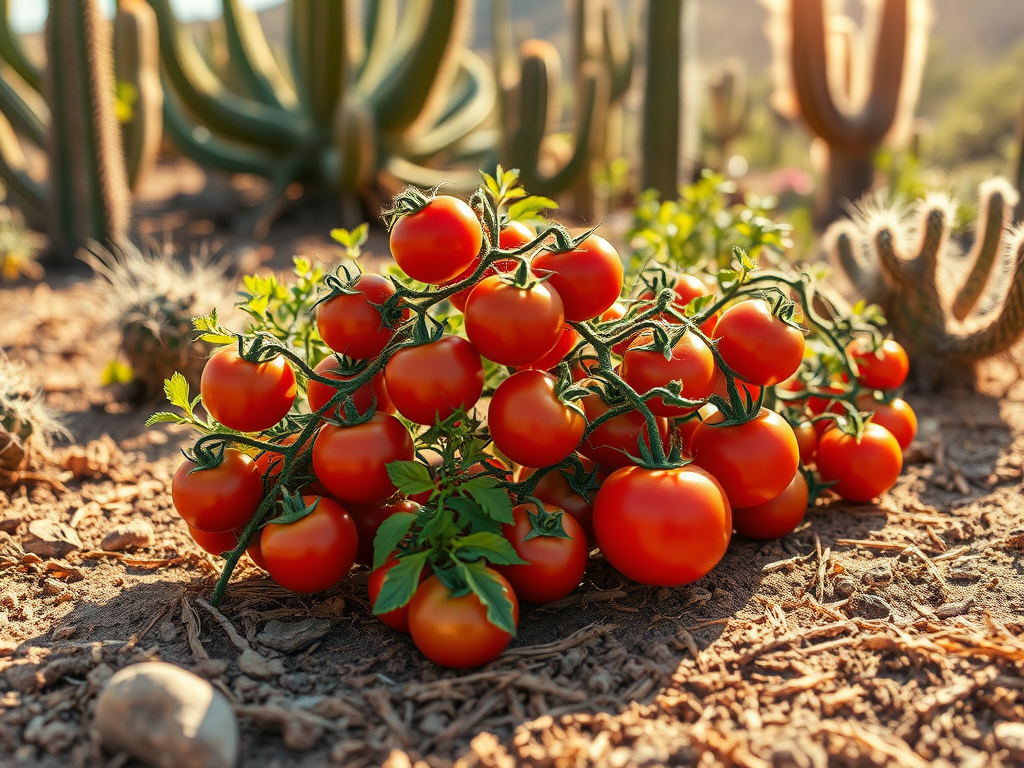
Growing tomatoes in Arizona’s low desert, including San Tan Valley, Queen Creek, and Florence, is a rewarding challenge that requires strategic planning to navigate the region’s intense heat and low rainfall (8-12 inches annually). In Pinal County’s arid climate (USDA Hardiness Zones 9a-10b), selecting heat-tolerant varieties, timing planting correctly, and using water-efficient practices are key to a bountiful harvest. This guide, informed by the University of Arizona Cooperative Extension and Pinal County Master Gardeners, provides essential tips for success, compares Arizona’s planting times with other U.S. regions, and highlights desert-adapted tomato varieties, including those from Native Seed Search in Tucson.
Understanding Arizona’s Climate for Tomato Growing
Arizona’s low desert presents unique challenges for tomato cultivation:
- Intense Heat: Summer temperatures often exceed 100°F, causing blossom drop and halting fruit set above 95°F.
- Short Growing Seasons: The heat limits the growing window, requiring early planting to maximize yields before summer.
- Low Rainfall: With only 8-12 inches annually, irrigation is critical, but overwatering can lead to root rot.
- Alkaline Soils: Soils with pH 7.5-8.5 and low organic matter (<1%) need amendments for optimal fertility.
Despite these challenges, tomatoes can thrive with careful variety selection, early planting, and proper care, as outlined by resources like Growing In The Garden and the University of Arizona Cooperative Extension.
Comparing Planting Times: Arizona vs. Other U.S. Regions
Tomato planting times vary across the U.S. due to diverse climates, affecting growing strategies:
| Region | Planting Time | Key Factors | Growing Season |
|---|---|---|---|
| Arizona Low Desert (Zones 9a-10b) | Late February to early March; August-September (fall planting) | Early planting avoids summer heat; fall planting for milder areas | Short (spring: Feb-May; fall: Sep-Nov) due to heat |
| Northeast/Midwest (Zones 3-6) | Late May to early June, after last frost | Cold winters delay planting; cooler summers extend season | Long (May-Sep) with milder temperatures |
| Southeast (Zones 7-9) | Late February to March, similar to Arizona | Mild winters allow early planting; humid summers extend season | Long (Mar-Sep) with high humidity |
| West Coast (Zones 7-10) | Coastal: year-round; Desert: Feb-Mar, like Arizona | Coastal mild climates allow flexibility; desert mirrors Arizona | Coastal: year-round; Desert: short (Feb-May) |
| Mountainous Regions (Zones 5b-7b) | Late May to June, after last frost | Cold winters and shorter summers delay planting | Moderate (Jun-Aug) with cooler nights |
Arizona-Specific Notes: In Pinal County, the last frost date is typically mid-February, allowing transplants from late February to early March. A second planting in August-September is viable for fall harvests in milder microclimates. Unlike the Northeast or Midwest, where cooler summers support longer seasons, Arizona’s heat necessitates early planting to beat temperatures above 95°F, which halt fruit set, as noted by Phoenix Home & Garden.
Choosing the Right Tomato Varieties for Arizona
Selecting heat-tolerant varieties with short days to maturity (60-90 days) is crucial for Arizona’s low desert. The University of Arizona Cooperative Extension and local growers recommend:
- General Heat-Tolerant Varieties:
- Celebrity: A hybrid with excellent disease resistance and high yields, ideal for Arizona’s heat.
- Sungold: A sweet cherry tomato, prolific and heat-tolerant, perfect for snacking.
- Sweet 100: Another cherry tomato with abundant yields, thriving in desert conditions.
- Yellow Pear: A yellow cherry tomato with good heat tolerance and visual appeal.
- Cherokee Purple: An heirloom with rich flavor, suitable with shade protection during peak heat.
- Native Seed Search Varieties (Tucson-based, nativeseeds.org):
- German Johnson: An heirloom with large, flavorful fruits, heat-tolerant, and ideal for early planting.
- Green Zebra: A green, striped tomato with tangy flavor, well-suited for desert climates.
- Mortgage Lifter: A beefsteak-type heirloom with rich taste, best planted early to avoid extreme heat.
- Pearson: A determinate variety with high yields and robust flavor, perfect for Arizona’s short season.
- Brandywine: An heirloom beefsteak with excellent taste, requiring careful heat management.
These varieties, especially those from Native Seed Search, are adapted to the Southwest’s arid conditions, offering resilience and flavor, as highlighted by Native Seeds/SEARCH.
Tips for Growing Tomatoes in Arizona
To ensure a successful tomato harvest in Pinal County, follow these expert tips from Growing In The Garden, SummerWinds Nursery, and the University of Arizona Cooperative Extension:
- Plant Early:
- Start seeds indoors in January or use transplants from late February to early March to maximize growth before summer heat. A fall planting (August-September) can work in milder areas for a second harvest.
- Source transplants from local nurseries like SummerWinds to avoid acclimation issues with out-of-state plants, as advised by Phoenix Home & Garden.
- Use Shade Cloth:
- Protect young plants from intense sunlight with 30-50% shade cloth, especially in late spring when temperatures rise. Remove shade cloth as plants mature to ensure fruit ripening, as noted in r/phoenix.
- Water Deeply but Infrequently:
- Apply 1-2 inches of water weekly via drip irrigation to encourage deep root growth and prevent root rot. Water early morning to minimize evaporation in Arizona’s heat (Drip Irrigation Guide).
- Mulch for Moisture Retention:
- Apply 2-3 inches of organic mulch (e.g., straw, bark) around plants to retain soil moisture, cool roots, and reduce weed competition. Mulch is critical in Arizona’s arid climate to conserve water.
- Fertilize Sparingly:
- Use a balanced, slow-release fertilizer (e.g., 10-10-10) every 4-6 weeks, applying ½ lb per 100 square feet. Avoid excess nitrogen, which promotes foliage over fruit, as warned by Arizona Worm Farm.
- Incorporate compost or worm castings to enrich Arizona’s nutrient-poor soils, as suggested by r/phoenix.
- Prune and Stake:
- Support indeterminate varieties (e.g., Sungold, Cherokee Purple) with cages or stakes to keep fruits off the ground and improve air circulation, reducing disease risk.
- Prune suckers (side shoots) on indeterminate plants to focus energy on fruit production, per Bonnie Plants.
- Manage Pests and Diseases:
- Watch for common pests like aphids and whiteflies, using organic controls like neem oil or insecticidal soap. Monitor for fungal diseases like powdery mildew, common in humid microclimates.
- Franciscan Landscape uses eco-friendly weed control with 10% vinegar for existing weeds and corn gluten meal for prevention, ensuring a safe garden environment.
- Soil Preparation:
- Amend alkaline soils (pH 7.5-8.5) with compost or sulfur to reach a pH of 6.0-7.0, ideal for tomatoes. Test soil through the University of Arizona’s Soil Testing Lab (extension.arizona.edu).
Local Resources
Pinal County gardeners can access robust support:
- Pinal County Master Gardeners: Contact the Plant Helpline (520-836-5221) or visit the Maricopa Agricultural Center’s demonstration garden (37860 W. Smith-Enke Rd, Maricopa, AZ) for tomato-growing advice. Workshops, like the Casa Grande Master Gardener Course starting February 13, 2025, offer hands-on learning (extension.arizona.edu/pinal-county-master-gardener-program).
- University of Arizona Cooperative Extension: Explore tomato-growing guides at extension.arizona.edu or refer to “Selecting Tomato Varieties” (extension.arizona.edu).
- Native Seed Search: Source desert-adapted tomato seeds at nativeseeds.org, offering varieties like German Johnson and Green Zebra.
- Local Nurseries: SummerWinds Nursery provides transplants, fertilizers, and shade cloth suited to Pinal County (summerwindsnursery.com).
Conclusion
Growing tomatoes in Arizona’s low desert, including San Tan Valley, Queen Creek, and Florence, is achievable with early planting, heat-tolerant varieties, and water-efficient practices. Unlike other U.S. regions with longer, cooler growing seasons, Arizona requires strategic timing in late winter or early fall to beat the heat. Varieties like Celebrity, Sungold, and Native Seed Search’s German Johnson and Green Zebra thrive in these conditions. With support from the Pinal County Master Gardeners and University of Arizona Cooperative Extension, you can enjoy a bountiful tomato harvest. Start your garden today—visit the Maricopa Agricultural Center, call the Plant Helpline, or explore Native Seed Search for the perfect seeds!
 Franciscan Landscape