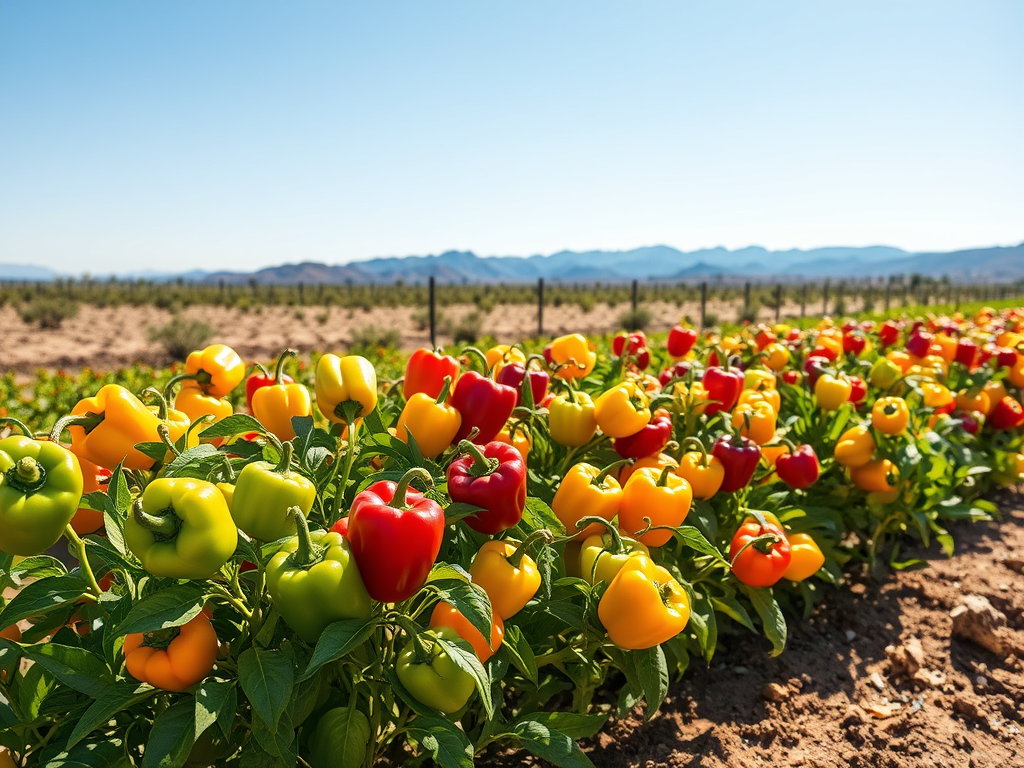
Growing bell peppers in Arizona’s low desert, encompassing San Tan Valley, Queen Creek, and Florence, is a rewarding endeavor that brings vibrant, sweet peppers to your table. In Pinal County’s arid climate (USDA Hardiness Zones 9a-10b, 8-12 inches annual rainfall), the intense heat, low humidity, and alkaline soils present challenges, but with strategic timing, heat-tolerant varieties, and proper care, home gardeners can achieve a bountiful harvest. This guide, informed by the University of Arizona Cooperative Extension and Pinal County Master Gardeners, details optimal planting times, growing conditions, and the best bell pepper varieties for success in Arizona’s low desert, ensuring your garden thrives despite the region’s demanding environment.
Why Grow Bell Peppers?
Bell peppers are a colorful, versatile crop, ranging from green to red, yellow, orange, and even purple, adding flavor and nutrition to salads, stir-fries, and stuffed dishes. In Arizona’s low desert, their ability to grow in warm conditions makes them a popular choice for home gardeners. With the right approach, you can enjoy fresh, homegrown peppers while practicing sustainable gardening that conserves water and enhances soil health in San Tan Valley, Queen Creek, and Florence.
Planting Times in Arizona vs. Other U.S. Regions
Timing is critical for growing bell peppers in Arizona’s low desert due to the region’s extreme summer heat, which can exceed 100°F and cause blossom drop or reduced fruit set above 90°F. Here’s how Arizona’s planting schedule compares to other U.S. regions:
| Region | Planting Time | Key Factors | Growing Season |
|---|---|---|---|
| Arizona Low Desert (Zones 9a-10b) | Late February to early March; August-September (fall planting) | Early planting avoids summer heat; fall planting for milder areas | Short (spring: Feb-May; fall: Sep-Nov) due to heat |
| Northeast/Midwest (Zones 3-6) | Late May to early June, after last frost | Cold winters delay planting; cooler summers extend season | Long (May-Sep) with milder temperatures |
| Southeast (Zones 7-9) | Late February to March, similar to Arizona | Mild winters allow early planting; humid summers extend season | Long (Mar-Sep) with high humidity |
| West Coast (Zones 7-10) | Coastal: year-round; Desert: Feb-Mar, like Arizona | Coastal mild climates allow flexibility; desert mirrors Arizona | Coastal: year-round; Desert: short (Feb-May) |
| Mountainous Regions (Zones 5b-7b) | Late May to June, after last frost | Cold winters and shorter summers delay planting | Moderate (Jun-Aug) with cooler nights |
Arizona-Specific Notes: In Pinal County, the last frost date is typically mid-February, allowing transplants from late February to early March. A fall planting in August-September is viable in milder microclimates, yielding through November. Unlike the Northeast or Midwest, where cooler summers support longer seasons, Arizona’s heat necessitates early planting to maximize fruit production before temperatures soar, as noted by Growing In The Garden (https://growinginthegarden.com/how-to-grow-peppers-growing-peppers/).
Growing Conditions
Bell peppers thrive in Arizona’s low desert when provided with optimal conditions tailored to the region’s climate:
- Soil: Bell peppers require well-draining soil rich in organic matter. Arizona’s soils are often alkaline (pH 7.5-8.5) and low in organic content (<1%), so amend with 2-4 inches of compost or well-rotted manure to improve fertility and drainage. Test soil pH and nutrients through the University of Arizona’s Soil Testing Lab (https://extension.arizona.edu/laboratories-conducting-soil-plant-feed-or-water-testing) to ensure a pH of 6.0-7.0, ideal for peppers.
- Watering: Provide consistent moisture, especially during flowering and fruit development, to prevent blossom drop. Apply 1-2 inches of water weekly via drip irrigation to deliver water directly to roots, minimizing evaporation in Arizona’s heat. Avoid overwatering to prevent root rot, as advised by PHX Gardening (https://phxgardening.com/how-to-grow-peppers-in-phoenix/).
- Mulching: Apply 2-3 inches of organic mulch, such as straw or bark, around plants to retain soil moisture, cool roots, and suppress weeds. Mulch is critical in Pinal County’s arid climate to conserve water and protect plants from heat stress.
- Sunlight and Shade: Bell peppers need 6-8 hours of sunlight daily but benefit from partial afternoon shade in Arizona’s intense sun. Use 30-50% shade cloth or plant near structures providing afternoon shade to reduce heat stress, as recommended by Gardening in the Desert (https://www.gardeninginthedesert.com/how-to-grow-peppers-sweet-and-hot/).
- Temperature: Bell peppers thrive at 70-85°F but struggle above 90°F, when fruit set may stop. Early planting ensures plants mature before peak summer heat, and shade cloth helps during late spring.
Best Bell Pepper Varieties for Home Gardeners
Selecting heat-tolerant varieties with short days to maturity (60-80 days) is essential for success in Arizona’s low desert. The following varieties, recommended by sources like Growing In The Garden, SummerWinds Nursery, and Gardening in the Desert, are well-suited for Pinal County:
| Variety | Type | Days to Maturity | Features | Source |
|---|---|---|---|---|
| Carmen Sweet Pepper | Sweet | 60-75 | Heat-tolerant, sweet, red when mature, ideal for deserts | Local nurseries, Garden Oracle |
| California Wonder | Bell | 70-75 | Classic bell pepper, reliable with care, green to red | SummerWinds Nursery, Growing In The Garden |
| Red Marconi | Sweet | 70-80 | Italian-style, sweet, smoky, great for roasting/stuffing | Gardening in the Desert, local nurseries |
| Lunchbox Peppers | Sweet | 65-75 | Mini, crisp, colorful (red, yellow, orange), perfect for snacking | Gardening in the Desert, local nurseries |
| Jimmy Nardello | Sweet | 75-80 | Heirloom, thin-walled, sweet, ideal for frying/drying | Gardening in the Desert, Native Seed Search |
Native Seed Search Varieties: While Native Seed Search (https://www.nativeseeds.org/) primarily focuses on heirloom and desert-adapted seeds, they offer sweet pepper varieties like Jimmy Nardello, which performs well in Arizona’s climate due to its heat tolerance and sweet flavor. Check their catalog for additional options suited to the low desert.
Variety Notes:
- Carmen Sweet Pepper is an excellent alternative to traditional bell peppers, as it sets fruit better in high temperatures, per Garden Oracle (https://gardenoracle.com/chili.html).
- California Wonder is a staple but requires careful heat management, such as shade cloth, to maximize yields.
- Red Marconi and Lunchbox Peppers are favored for their flavor and versatility, thriving in Arizona’s conditions with proper care.
- Jimmy Nardello, a thin-walled heirloom, is prized for its productivity and culinary uses, as noted by Gardening in the Desert.
Care and Maintenance
To ensure a successful bell pepper harvest in Arizona’s low desert, follow these care tips:
- Planting: Start seeds indoors in January (6-8 weeks before transplanting) or use nursery-bought transplants in late February to early March. Fall planting (August-September) is viable in milder areas. Source transplants from local nurseries like SummerWinds to avoid acclimation issues, as advised by InMaricopa (https://www.inmaricopa.com/growing-tomatoes-peppers-in-your-desert-garden/).
- Fertilization: Apply a balanced, slow-release fertilizer (e.g., 10-10-10) every 4-6 weeks, using ½ lb per 100 square feet. Avoid excess nitrogen, which promotes foliage over fruit, as noted by AZ Plant Lady (https://www.azplantlady.com/tag/bell-pepper). Incorporate compost or worm castings to enrich nutrient-poor soils.
- Pruning and Support: Stake or cage plants to keep fruits off the ground and improve air circulation, reducing disease risk. Prune lower leaves if they touch the soil to prevent fungal issues, per Bonnie Plants (https://bonnieplants.com/).
- Pest and Disease Management: Monitor for aphids, whiteflies, and spider mites, common in Arizona. Use organic controls like neem oil or insecticidal soap, safe for edible crops. Prevent powdery mildew by ensuring good air circulation and avoiding overhead watering, as recommended by Dave’s Garden (https://davesgarden.com/community/forums/t/746142/). Franciscan Landscape uses eco-friendly weed control with 10% vinegar for existing weeds and corn gluten meal for prevention, ensuring a safe garden environment.
- Harvesting: Harvest bell peppers when they reach the desired size and color (green, red, yellow, or orange, depending on variety). Use sharp pruners to avoid damaging plants, as advised by Garden Oracle. Regular harvesting encourages continuous production.
Local Resources
Pinal County gardeners have access to robust support:
- Pinal County Master Gardeners: Contact the Plant Helpline (520-836-5221) or visit the Maricopa Agricultural Center’s demonstration garden (37860 W. Smith-Enke Rd, Maricopa, AZ) for hands-on guidance on growing bell peppers. Workshops, like the Casa Grande Master Gardener Course starting February 13, 2025, offer practical learning (https://extension.arizona.edu/pinal-county-master-gardener-program).
- University of Arizona Cooperative Extension: Explore vegetable gardening resources at extension.arizona.edu or refer to “Growing Peppers and Chiles” (https://cales.arizona.edu/yavapai/anr/hort/byg/archive/growingchilesandpeppers2021.html).
- Native Seed Search: Source desert-adapted seeds like Jimmy Nardello at nativeseeds.org, offering varieties suited to Arizona’s climate.
- Local Nurseries: SummerWinds Nursery provides transplants, fertilizers, shade cloth, and drip irrigation kits tailored to Pinal County (https://summerwindsnursery.com/).
- AMWUA: Offers water-saving tips and plant care advice compatible with bell pepper cultivation (https://www.amwua.org/).
Conclusion
Growing bell peppers in Arizona’s low desert, including San Tan Valley, Queen Creek, and Florence, is achievable with careful planning and the right techniques. By planting in late February to early March, choosing heat-tolerant varieties like Carmen Sweet Pepper, California Wonder, and Jimmy Nardello, and providing proper care with drip irrigation, mulch, and shade, home gardeners can enjoy a vibrant harvest. Unlike cooler U.S. regions with longer growing seasons, Arizona’s early planting maximizes yields before summer heat. With support from the Pinal County Master Gardeners, University of Arizona Cooperative Extension, and Native Seed Search, your bell pepper garden can thrive. Start today—visit the Maricopa Agricultural Center, call the Plant Helpline, or explore nativeseeds.org for the perfect seeds!
 Franciscan Landscape