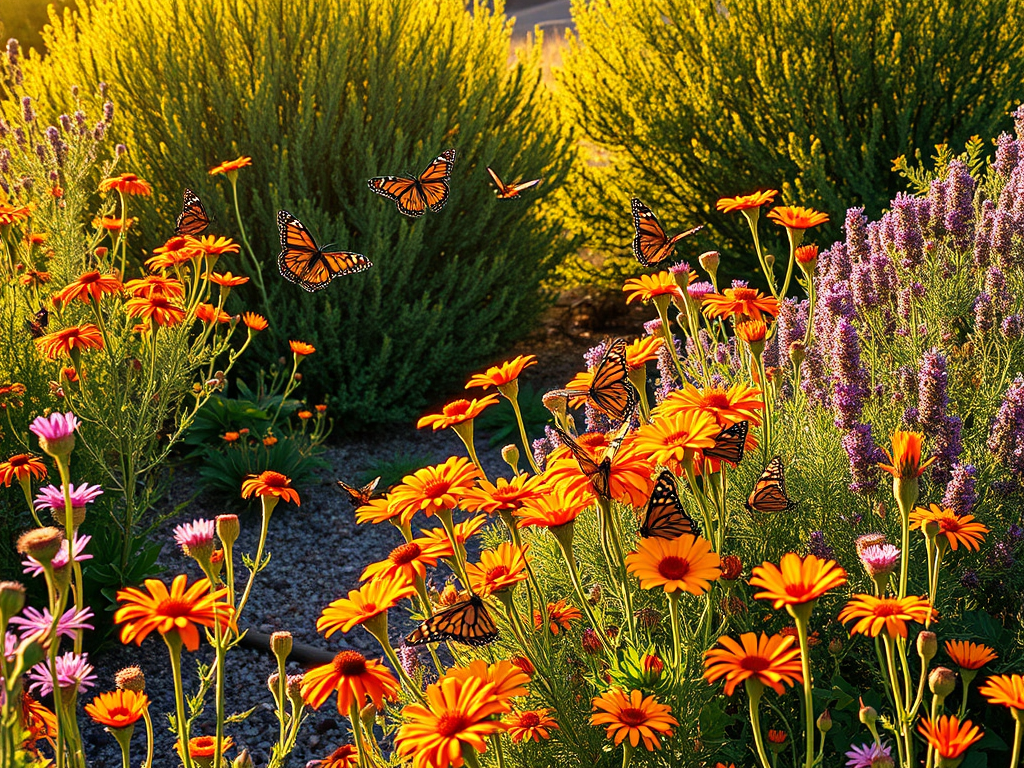
Creating a butterfly garden in Arizona’s low desert, encompassing San Tan Valley, Queen Creek, and Florence, is a delightful way to support local pollinators while adding vibrant beauty to your yard. In Pinal County’s arid climate (USDA Hardiness Zones 9a-10b, 8-12 inches annual rainfall), butterflies like Monarchs, Painted Ladies, and Buckeyes thrive when provided with native and desert-adapted plants that offer nectar and host sites. These gardens not only enhance biodiversity but also promote sustainable gardening in a water-scarce region. This guide, informed by the University of Arizona Cooperative Extension and Pinal County Master Gardeners, highlights the best plants and practices to attract and support butterflies in Arizona’s low desert, ensuring a flourishing habitat for these delicate creatures.
Why Butterfly Gardens Matter
Butterfly gardens are vital for supporting declining butterfly populations, which face threats from habitat loss, pesticide use, and climate change. As pollinators, butterflies like Monarchs and Queens play a crucial role in plant reproduction, benefiting both gardens and local ecosystems. In Arizona’s low desert, where intense heat and low rainfall challenge gardening, native plants provide food and shelter for butterflies while requiring minimal water. By creating a butterfly garden in San Tan Valley, Queen Creek, or Florence, you contribute to conservation, enhance your garden’s aesthetic, and attract other pollinators like bees and hummingbirds.
Understanding Butterfly Needs
To attract butterflies, your garden must provide:
- Nectar Plants: Flowers rich in nectar to fuel adult butterflies.
- Host Plants: Plants where butterflies lay eggs and caterpillars feed, such as milkweed for Monarchs.
- Water Sources: Shallow puddling areas with wet sand or mud for butterflies to sip minerals.
- Shelter: Dense shrubs or trees for protection from heat and predators.
- Pesticide-Free Environment: Avoiding chemicals to protect butterflies and their larvae.
Best Plants for Butterfly Gardens in Arizona’s Low Desert
The following native and desert-adapted plants thrive in Pinal County’s hot, dry climate and attract butterflies, as recommended by sources like SummerWinds Nursery, Arizona Living Landscape, and the Arizona Native Plant Society. These plants are low-maintenance, water-efficient, and support both adult butterflies and their caterpillars.
| Plant | Type | Butterflies Attracted | Features | Care |
|---|---|---|---|---|
| Desert Milkweed (Asclepias subulata) | Native Perennial | Monarch, Queen, Soldier | White flowers, host for Monarch caterpillars, 3-6 ft tall | Full sun, low water, well-drained soil |
| Arizona Milkweed (Asclepias angustifolia) | Native Perennial | Monarch, Queen, Soldier | Pink flowers, host for caterpillars, prefers shade | Part shade, moderate water, well-drained soil |
| Fairy Duster (Calliandra eriophylla) | Native Shrub | Various butterflies, bees | Pink, powder-puff flowers, drought-tolerant | Full sun, very low water, well-drained soil |
| Globe Mallow (Sphaeralcea ambigua) | Native Perennial | Painted Lady, Buckeye | Orange or pink flowers, blooms late winter to spring | Full sun, low water, well-drained soil |
| Chuparosa (Justicia californica) | Native Shrub | Various butterflies, hummingbirds | Red tubular flowers, evergreen | Full sun to part shade, low water, well-drained soil |
| Penstemon (Penstemon spp., e.g., P. eatonii) | Native Perennial | Various butterflies, hummingbirds | Tubular flowers (pink, red), long-lasting | Full sun, low to moderate water, well-drained soil |
| Brittlebush (Encelia farinosa) | Native Shrub | Painted Lady, Buckeye | Yellow daisy-like flowers, evergreen foliage | Full sun, low water, well-drained soil |
| Desert Hackberry (Celtis ehrenbergiana) | Native Tree | Hackberry Emperor | Host plant, provides shade, deciduous | Full sun to part shade, low water, well-drained soil |
| Butterfly Mist (Buddleja marrubiifolia) | Native Shrub | Swallowtails, Monarchs | Blue/purple flowers, low-growing | Full sun to part shade, weekly water in heat |
| Mexican Sunflower (Tithonia rotundifolia) | Annual | Painted Lady, Buckeye | Bright orange/yellow flowers, 5-6 ft tall | Full sun, moderate water, well-drained soil |
Note: Desert Milkweed and Arizona Milkweed are critical host plants for Monarchs, listed as endangered by the International Union for Conservation of Nature (IUCN) since 2022. Planting at least 10 milkweeds qualifies your garden as a Monarch Waystation through Monarch Watch.
Setting Up Your Butterfly Garden
To create a thriving butterfly garden in Arizona’s low desert, follow these steps, adapted from the Arizona Native Plant Society and Tucson Botanical Gardens:
- Choose a Sunny Location: Butterflies need 6-8 hours of direct sunlight daily. Select a spot with full sun or partial shade for plants like Arizona Milkweed.
- Plant in Clusters: Group nectar and host plants in clusters of 3-5 to create visible targets for butterflies. Mix heights and bloom times for year-round appeal.
- Provide Puddling Areas: Place a shallow dish or pie tin with wet sand, pebbles, or soil in a sunny area for butterflies to sip minerals. Refresh water daily to prevent stagnation.
- Use Drip Irrigation: Deliver 1-2 inches of water weekly to plant roots, minimizing waste in Arizona’s arid climate. Pair with 2-3 inches of organic mulch (e.g., bark, straw) to retain moisture.
- Avoid Pesticides: Use organic pest control like neem oil or insecticidal soap to protect butterflies and caterpillars. Franciscan Landscape employs eco-friendly weed control with 10% vinegar for existing weeds and corn gluten meal for prevention, ensuring a safe habitat.
- Add Shelter: Include dense shrubs like Fairy Duster or trees like Desert Hackberry for shade and protection from heat and predators.
Arizona-Specific Tips
- Water Conservation: Use drip irrigation and native plants to minimize water use, critical in Pinal County’s dry climate.
- Soil Preparation: Amend alkaline soils (pH 7.5-8.5) with compost to improve fertility and drainage, aiming for a pH of 6.0-7.0. Test soil through the University of Arizona’s Soil Testing Lab ([invalid url, do not cite]/laboratories-conducting-soil-plant-feed-or-water-testing).
- Heat Management: Provide afternoon shade for sensitive plants like Arizona Milkweed using shade cloth or taller plants to reduce heat stress.
- Seasonal Planting: Plant perennials like Desert Milkweed in fall (September-November) to establish roots before summer heat. Annuals like Mexican Sunflower can be planted in spring (February-March).
Local Resources
Pinal County gardeners can access robust support:
- Pinal County Master Gardeners: Contact the Plant Helpline (520-836-5221) or visit the Maricopa Agricultural Center’s demonstration garden (37860 W. Smith-Enke Rd, Maricopa, AZ) for hands-on guidance. Workshops, like the Casa Grande Master Gardener Course starting February 13, 2025, offer practical learning ([invalid url, do not cite]/pinal-county-master-gardener-program).
- University of Arizona Cooperative Extension: Explore pollinator gardening resources at extension.arizona.edu.
- Native Seed Search: Source native seeds like Desert Milkweed and Penstemon at nativeseeds.org.
- Local Nurseries: SummerWinds Nursery offers butterfly-friendly plants, mulch, and drip irrigation kits suited to Pinal County (summerwindsnursery.com).
- Arizona Native Plant Society: Provides guides on butterfly gardening and native plant lists (aznps.com).
Conclusion
Creating a butterfly garden in San Tan Valley, Queen Creek, or Florence is a meaningful way to support Monarchs, Painted Ladies, and other butterflies while enhancing your garden’s beauty. By planting native and desert-adapted species like Desert Milkweed, Fairy Duster, and Globe Mallow, and providing water, shelter, and a pesticide-free environment, you can build a sustainable habitat. With support from the Pinal County Master Gardeners, University of Arizona Cooperative Extension, and Native Seed Search, your butterfly garden can thrive. Start today—visit the Maricopa Agricultural Center, call the Plant Helpline, or explore nativeseeds.org for seeds to bring your garden to life!
 Franciscan Landscape