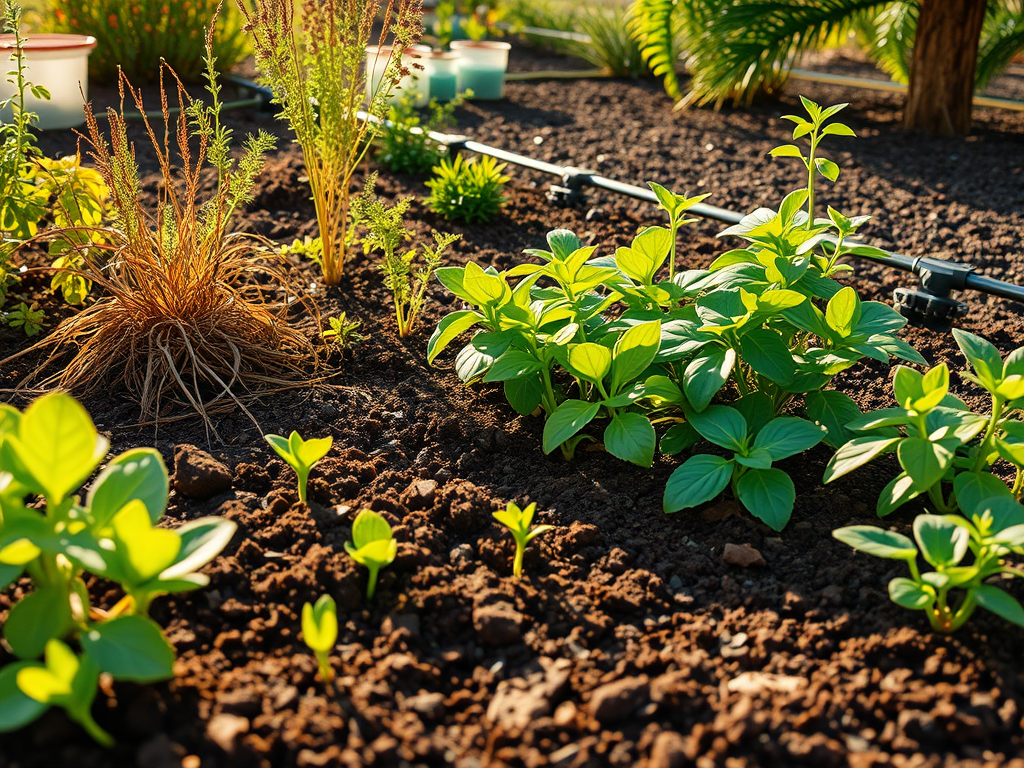
Improving soil health is essential for a thriving garden, especially in Arizona’s low desert where soils are often challenging. This guide offers simple steps to test and amend your soil for better plant growth in San Tan Valley, Queen Creek, and Florence.
Testing Your Soil
Start by checking your soil’s pH, nutrient levels, and organic matter. You can use affordable DIY kits from local nurseries or send a sample to a lab like the University of Arizona Cooperative Extension’s Soil Testing Lab for detailed results. Test in spring or fall to prepare for planting seasons, and look for a pH of 6.0-7.0, nutrient levels like nitrogen and phosphorus, and aim for 4-6% organic matter.
Amending Your Soil
Based on your test, add organic matter like compost or manure to boost fertility and water retention. If your soil is too alkaline (common in Arizona, with pH 7.5-8.5), use sulfur to lower it, and retest after a few months. Mulch with 2-3 inches of wood chips or straw to retain moisture and add nutrients, and use slow-release organic fertilizers to address nutrient gaps without overdoing it.
Water Conservation
In Arizona’s dry climate, use drip irrigation to deliver water efficiently, watering deeply but infrequently (1-2 inches weekly) to encourage deep roots. This helps maintain soil health while conserving water.
Local Support
For expert help, contact the Pinal County Master Gardeners at 520-836-5221 or visit their demonstration garden at the Maricopa Agricultural Center in Maricopa, AZ. You can also explore resources at University of Arizona Cooperative Extension Home Gardening.
Comprehensive Analysis of Soil Health Improvement in Arizona’s Low Desert
This detailed analysis explores how to test and amend garden soil to optimize plant growth and health, specifically tailored to the low desert areas of San Tan Valley, Queen Creek, and Florence, Arizona, as of 06:59 PM MST on Saturday, July 05, 2025. The focus is on leveraging resources from the University of Arizona Cooperative Extension and Pinal County Master Gardeners, ensuring credibility and regional relevance.
Background and Methodology
Soil health is critical for successful gardening, particularly in Arizona’s low desert (USDA Hardiness Zones 9-10B), where alkaline soils, low organic matter, and arid conditions (8-12 inches annual rainfall) pose challenges. Testing soil for pH, nutrients, and organic matter, followed by targeted amendments, ensures plants thrive while conserving water. The user’s request emphasizes eco-friendly, practical methods, aligning with sustainable gardening practices promoted by the University of Arizona Cooperative Extension. The analysis draws on web searches for soil health improvement, prioritizing Arizona-specific resources like Green Living Magazine, We Kill Weeds, and Growing In The Garden, supplemented by general gardening sources and Extension publications.
Initial Search and Evaluation
Web searches for “soil health improvement tips for gardening” and “soil health improvement tips for gardening in Arizona” yielded relevant sources:
- Green Living Magazine: “Soil 101 for Arizona” emphasizes balancing soil texture, aeration, mulching, organic matter, and microbial health, tailored to Arizona’s desert soils (Green Living Magazine).
- We Kill Weeds: “Soil Preparation for an Arizona Garden” highlights breaking up compacted soil, testing, amending with compost or sulfur, fertilizing, and watering thoroughly (We Kill Weeds).
- Monrovia: “6 Ways to Improve Garden Soil for Healthier Plants” provides general tips like mulching, composting, and testing, with plant recommendations for challenging soils (Monrovia).
- Growing In The Garden: “Amending Soil” and “Vegetable Gardening in Arizona” recommend compost, worm castings, and raised bed mixtures for desert soils (Growing In The Garden, Growing In The Garden).
- University of Arizona Cooperative Extension: The “Home Gardening” page, “Vegetable Planting Calendar,” and “Arizona Master Gardener Manual” offer soil-related guidance, though specific soil health publications were not directly accessible (University of Arizona Cooperative Extension Home Gardening, Vegetable Planting Calendar, Arizona Master Gardener Manual).
- Other Sources: Penn State Extension, USDA ARS, and RHS Gardening provide general soil health principles applicable to Arizona with adjustments (Penn State Extension, USDA ARS, RHS Gardening).
Detailed Content Analysis
The Green Living Magazine article outlines Arizona-specific soil challenges:
- Soil Texture: Desert soils are often sandy, draining quickly but lacking nutrient retention. Adding organic matter balances sand, silt, and clay.
- Aeration: Compacted soils, common after drought or rain, need loosening to ensure root respiration.
- Mulching: Organic mulch (e.g., wood chips) conserves water, reduces evaporation, and adds nutrients, lowering soil temperatures by 10-30°F.
- Organic Matter: Arizona soils have less than 1% organic matter, requiring compost, leaves, or manure to boost fertility.
- Microbes: Beneficial bacteria and fungi are crucial for nutrient cycling. Organic amendments support microbial health, while synthetic chemicals harm it.
- Plant Selection: Desert-adapted plants like rosemary and mesquite thrive in local soils.
The We Kill Weeds article adds:
- Compaction: Loosen soil with tools or aerators to improve drainage and root growth.
- Testing: Soil tests identify pH, nutrients, and chemical residues, guiding amendments.
- Amendments: Use sulfur for high pH, lime for low pH, and compost for nutrients.
- Fertilization: Granular fertilizers provide slow-release nutrients for vegetables and fruits.
- Watering: Deep watering after amendments ensures integration.
Monrovia’s general tips include:
- Mulch: 3-4 inches of wood or leaf mulch improves structure and suppresses weeds.
- Compost: Adds micro- and macronutrients, improving soil texture.
- Manure: Composted herbivore manure enhances long-term soil health.
Growing In The Garden recommends:
- Raised Beds: Mix compost, coconut coir, and vermiculite for raised beds, ideal for desert soils.
- Worm Castings: Apply 4 cups per 4×8 raised bed each season for nutrient boost.
- Compost: Essential for improving water retention and fertility.
The University of Arizona Cooperative Extension’s resources, while not directly accessed for specific soil health documents, emphasize testing and organic amendments in their gardening guides, aligning with local practices.
Soil Health Challenges in Pinal County
Pinal County’s low desert soils are characterized by:
- High pH: Typically 7.5-8.5, limiting nutrient availability.
- Low Organic Matter: Less than 1%, reducing fertility and water retention.
- Compaction: Caused by drought or irrigation, hindering root growth.
- Salinity: High salt levels from irrigation can harm plants.
Soil Health Improvement Methods
The following table summarizes key methods for testing and amending soil in Arizona’s low desert, based on Extension and local resources:
| Method | Description | Best Practices | Arizona-Specific Notes |
|---|---|---|---|
| Soil Testing | Assess pH, nutrients, organic matter, and salinity. | Use DIY kits or send samples to UA Soil Testing Lab. Test in spring/fall. | Arizona soils are often alkaline; test for salinity due to irrigation. |
| Add Organic Matter | Boosts fertility, water retention, and microbial activity. | Add 2-4 inches of compost, manure, or leaf mold annually. | Use local compost from Tank’s Green Stuff or Arizona Worm Farm. |
| Aerate Soil | Improves drainage and root respiration. | Use shovel, rake, or core aerator after drought/rain. | Essential for compacted desert soils. |
| Mulch | Retains moisture, adds nutrients, reduces weeds. | Apply 2-3 inches of wood chips, straw, or gravel. | Lowers soil temperature by 10-30°F in Arizona’s heat. |
| Adjust pH | Corrects alkalinity/acidity for nutrient availability. | Add sulfur to lower pH; lime to raise (rare). Retest after 3-6 months. | Most Arizona soils need sulfur to reduce alkalinity. |
| Fertilize | Addresses nutrient deficiencies. | Use organic fertilizers (compost, worm castings) or granular N-P-K based on tests. | Avoid over-fertilizing to prevent runoff in arid climates. |
| Conserve Water | Supports soil health with efficient irrigation. | Use drip irrigation; water deeply but infrequently. | Critical in Arizona’s dry climate. |
| Support Microbes | Enhances nutrient cycling and plant health. | Avoid synthetic chemicals; add compost/mulch. | Desert soils rely on microbes for nutrient uptake. |
Tailoring to Arizona’s Low Desert
Pinal County’s climate requires water-efficient and heat-tolerant practices:
- Drip Irrigation: Minimizes water waste, delivering moisture directly to roots.
- Desert-Adapted Plants: Native or drought-tolerant plants like palo verde, mesquite, and desert marigold thrive in alkaline, low-nutrient soils.
- Weed Control: Franciscan Landscape uses 10% vinegar for existing weeds and corn gluten meal for pre-emergent control, ensuring safety for plants, families, and pets.
Local Resources
- Pinal County Master Gardeners: Contact the Plant Helpline (520-836-5221) or visit the Maricopa Agricultural Center’s demonstration garden (37860 W. Smith-Enke Rd, Maricopa, AZ) for soil health demonstrations. Workshops, like the Casa Grande Master Gardener Course (February 13, 2025), offer hands-on learning (Pinal County Master Gardeners).
- University of Arizona Cooperative Extension: Access soil health guides at University of Arizona Cooperative Extension Home Gardening or contact the Soil Testing Lab (Laboratories Conducting Soil, Plant, Feed or Water Testing – UA Cooperative Extension). The Arizona Master Gardener Manual includes soil management advice.
- Local Nurseries: SummerWinds Nursery offers compost, mulch, and fertilizers suited to Pinal County.
Conclusion
Improving soil health in San Tan Valley, Queen Creek, and Florence requires addressing Arizona’s unique soil challenges through testing, organic amendments, and water-efficient practices. By building a fertile, well-structured soil, gardeners can ensure vibrant plant growth and sustainable landscapes. The University of Arizona Cooperative Extension and Pinal County Master Gardeners provide invaluable resources to guide this process, making it accessible for all gardeners.
 Franciscan Landscape