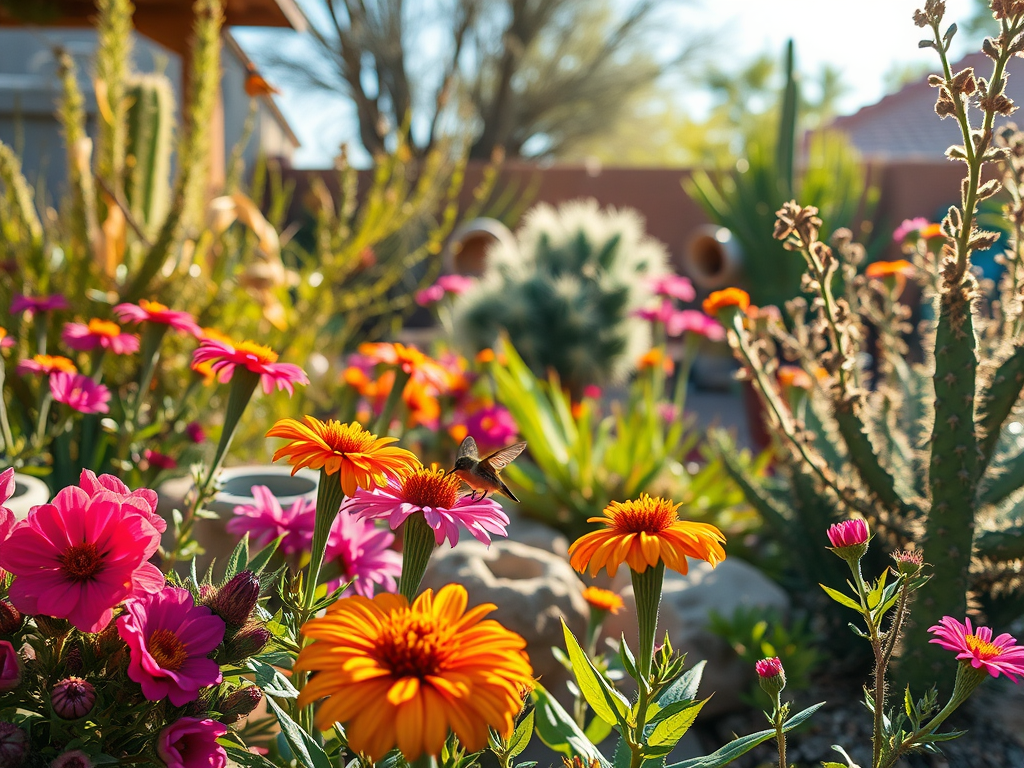
Transforming your backyard into a wildlife habitat in San Tan Valley, Queen Creek, and Florence, Arizona, is a rewarding way to support local biodiversity while enhancing your garden’s beauty. In the arid low desert of Pinal County (USDA Hardiness Zones 9-10B, 8-12 inches annual rainfall), creating a haven for birds, bees, butterflies, and other wildlife requires thoughtful design to provide food, water, shelter, and nesting sites. This guide, informed by the University of Arizona Cooperative Extension and Pinal County Master Gardeners, offers practical tips to design a sustainable, wildlife-friendly garden that attracts species like Cactus Wrens, Anna’s Hummingbirds, and native pollinators, fostering a thriving ecosystem in Arizona’s challenging climate.
Why Create a Wildlife Habitat?
A wildlife-friendly garden in Pinal County offers numerous benefits:
- Biodiversity: Supports local species, including pollinators critical for food crops and native plants.
- Pest Control: Birds and beneficial insects, like ladybugs, naturally reduce garden pests.
- Pollination: Bees and butterflies enhance plant reproduction, ensuring vibrant gardens.
- Ecological Balance: Provides habitats for wildlife facing urban habitat loss.
- Aesthetic Appeal: Adds color, movement, and life to your backyard, creating a serene retreat.
By fostering a wildlife habitat, you contribute to Arizona’s ecosystems while maintaining a water-efficient, low-maintenance garden.
Common Wildlife in Pinal County
Pinal County’s low desert hosts diverse species that can thrive in backyard habitats, as noted by the Pinal County Birding Trail and Audubon resources:
- Birds:
- Cactus Wren: Arizona’s state bird, nests in cacti and shrubs.
- Anna’s Hummingbird: Attracted to nectar-rich flowers and feeders.
- Gila Woodpecker: Nests in saguaro cacti, feeds on insects and fruit.
- White-winged Dove: Common at seed feeders and water sources.
- Curve-billed Thrasher: Forages in open areas, loves berries.
- Pollinators:
- Native Bees: Solitary bees like mason bees pollinate native plants.
- Butterflies: Monarchs and Swallowtails seek nectar and host plants.
- Other Wildlife:
- Lizards: Desert spiny lizards control insect populations.
- Small Mammals: Ground squirrels and rabbits, though sometimes pests, contribute to ecosystems.
Key Elements of a Wildlife Habitat
To attract and sustain wildlife, your garden must provide four essential components: food, water, shelter, and nesting sites. The following strategies, drawn from the University of Arizona Cooperative Extension and Audubon’s guidelines, are tailored to Pinal County’s arid climate.
1. Provide Food
Offer diverse food sources to attract a variety of species:
- Native Plants: Plant nectar-rich and seed-producing natives to feed birds, bees, and butterflies. Recommended plants include:
- Desert Willow (Chilopsis linearis): Nectar for hummingbirds, seeds for doves.
- Mesquite (Prosopis spp.): Seeds and pods for birds and mammals.
- Penstemon (Penstemon spp.): Nectar for bees and hummingbirds.
- Desert Marigold (Baileya multiradiata): Seeds for finches and sparrows.
- Chuparosa (Justicia californica): Red flowers attract hummingbirds (AMWUA Plants).
- Feeders:
- Bird Feeders: Use ground feeders for doves and sparrows, tube feeders for finches, and suet feeders for woodpeckers. Offer black oil sunflower seeds, safflower, or nyjer seed, avoiding low-quality mixes with fillers like milo (Audubon Bird Feeding).
- Hummingbird Feeders: Fill with a 4:1 water-to-white sugar solution (no red dye or honey). Clean weekly to prevent mold in Arizona’s heat (Audubon Hummingbird Yard).
- Insects: Encourage beneficial insects like ladybugs by planting dill, yarrow, or marigolds, which provide food for birds and lizards.
2. Provide Water
Water is critical in Arizona’s dry climate, where natural sources are scarce:
- Birdbaths: Install a shallow birdbath (1-2 inches deep) with a rough surface for grip. Place in an open area with nearby cover for safety. Change water daily to prevent stagnation and mosquito breeding.
- Drip Fountains: Add a drip or mister to birdbaths to attract more birds, especially hummingbirds and thrashers. Solar-powered fountains are eco-friendly and low-maintenance.
- Ponds or Water Features: Small ponds with native aquatic plants like cattails provide hydration and attract amphibians and birds.
- Maintenance: Clean water sources twice monthly with a 10% bleach solution to prevent disease, as recommended by the Cooperative Extension (Backyard Bird Feeding).
3. Provide Shelter
Shelter offers safety from predators and harsh weather:
- Native Plants: Plant dense shrubs like Texas sage or brittlebush for cover. Trees like palo verde or ironwood provide shade and perching sites.
- Brush Piles: Create piles of branches or logs in a corner of your yard to offer hiding spots for lizards and small mammals.
- Rock Piles: Arrange rocks or boulders to provide basking spots for lizards and cover for ground-dwelling birds (Wildflower Desert Design).
4. Provide Nesting Sites
Nesting sites encourage wildlife to stay and reproduce:
- Birdhouses: Install birdhouses for cavity-nesters like Gila Woodpeckers and Cactus Wrens. Use 1.25-inch entrance holes for wrens and 1.5-inch for woodpeckers, placed 5-10 feet high, facing away from prevailing winds (Audubon Birdhouses).
- Native Plants: Plant cacti like saguaro or cholla for natural nesting sites for woodpeckers and wrens.
- Bee Hotels: Create small bee hotels with hollow bamboo or drilled wood blocks for solitary bees like mason bees. Place in sunny, sheltered areas (Native Beeology).
- Butterfly Host Plants: Include milkweed for Monarchs or desert hackberry for Empress Leilia butterflies to support egg-laying and caterpillar growth.
5. Maintain a Safe Environment
A safe habitat protects wildlife from human-related threats:
- Avoid Chemicals: Use natural pest control methods like neem oil or insecticidal soap to protect pollinators and birds. Synthetic pesticides harm beneficial insects and contaminate food sources.
- Weed Control: At Franciscan Landscape, we use eco-friendly methods, applying 10% vinegar to kill existing weeds and corn gluten meal to prevent germination, ensuring safety for wildlife, families, and pets.
- Cat Control: Keep cats indoors, as they are a leading cause of bird mortality. Use motion-activated sprinklers to deter stray cats.
- Window Safety: Apply decals or netting to windows to prevent bird collisions, especially near feeders or water sources.
Arizona-Specific Tips
Pinal County’s arid climate requires water-efficient and heat-tolerant practices:
- Water Conservation: Use drip irrigation to deliver water directly to plant roots, minimizing waste. Water deeply but infrequently (1-2 inches weekly), as advised by the University of Arizona Cooperative Extension (Drip Irrigation Guide).
- Desert-Adapted Plants: Choose natives like desert willow, mesquite, and chuparosa, which thrive with minimal water and provide food and shelter for wildlife (AMWUA Plants).
- Shade and Mulch: Provide shade with trees or shade cloth and apply 2-3 inches of organic mulch (e.g., bark) to retain moisture and cool soil, benefiting both plants and wildlife.
Maintenance and Seasonal Considerations
- Regular Cleaning: Clean feeders and birdbaths twice monthly with a 10% bleach solution to prevent disease, especially in Arizona’s heat.
- Seasonal Planting: Plant natives in fall (September-November) to establish roots before summer heat, ensuring year-round wildlife support.
- Monitor Wildlife: Observe which species visit and adjust food or plant offerings to attract desired wildlife, such as adding more nectar plants for hummingbirds.
Local Resources
Pinal County gardeners can access robust support:
- Pinal County Master Gardeners: Contact the Plant Helpline (520-836-5221) or visit the Maricopa Agricultural Center’s demonstration garden (37860 W. Smith-Enke Rd, Maricopa, AZ) to see wildlife-friendly gardens (Pinal County Master Gardeners). Attend workshops like the Casa Grande Master Gardener Course starting February 13, 2025.
- University of Arizona Cooperative Extension: Explore wildlife and gardening resources at Home Gardening or refer to the “Backyard Bird Feeding” guide (Backyard Bird Feeding).
- Pinal County Birding Trail: Discover local hotspots like the GRIC Gilbert Rd Agricultural Ponds for inspiration (Pinal County Birding Trail).
- Audubon and Native Beeology: Access guides on birdhouses, bee hotels, and hummingbird-friendly yards (Audubon, Native Beeology).
Conclusion
Creating a wildlife habitat in your San Tan Valley, Queen Creek, or Florence backyard is a meaningful way to support local birds, bees, butterflies, and other species while enhancing your garden’s beauty. By incorporating native plants, water sources, shelter, and nesting sites, and avoiding harmful chemicals, you can foster a thriving ecosystem. With guidance from the Pinal County Master Gardeners and University of Arizona Cooperative Extension, start small with a birdbath or native plant and watch your backyard come alive. Visit the Maricopa Agricultural Center or call the Plant Helpline to begin your wildlife-friendly gardening journey today!
 Franciscan Landscape